
Opening a salon takes more than a great location and a talented team. It takes a plan. A salon business plan maps out your goals before you spend a single dollar.
It helps you secure funding. It keeps your budget on track. It shapes your marketing and staffing. It also guides your daily operations from day one.
In this guide you will learn how to write a salon business plan step by step. You will also get a free salon business plan template. Use it to turn your ideas into a working plan you can act on today.
What Is a Salon Business Plan and Why Do You Need One?
A salon business plan is a written document. It outlines your salon's goals and services. It also covers your target market and finances. It works as a roadmap for opening or growing your business.
You need one because it forces you to think through every part of your salon. It also gives lenders and investors a reason to trust your idea.
Define Your Salon's Goals and Vision

Your plan starts with a clear vision. What kind of salon do you want to build? Write down your short-term goals. Write down your long-term goals too.
This section keeps your team aligned. It also helps you measure progress as your salon grows.
Understand Your Target Customers and Market
A strong plan defines who you serve. It looks at local demographics and income levels. It also studies beauty habits in your area. This research shapes your services and pricing. It shapes your marketing later on as well.
Estimate Startup and Operating Costs
Your plan should list every cost. This includes rent and equipment. It also includes licenses and supplies. Add monthly expenses like payroll and utilities too. Accurate numbers help you avoid running out of cash early.
Plan Your Marketing and Growth Strategy
A business plan lays out how you will attract clients. It also maps your path for future growth. This might include new services or a second location. Learn more about scaling with multi-location salon strategies.
Make Smarter Financial Decisions
Clear numbers make budgeting easier. You can track performance against your projections using salon analytics and reporting tools. This helps you catch problems early. You can then adjust fast.
Attract Investors or Secure a Business Loan
Banks and investors want proof your salon can succeed. A detailed plan with real numbers builds that trust. It shows you understand your market and your costs.
What Should a Salon Business Plan Include?
A complete salon business plan covers nine key sections. Each one plays a specific role in your overall strategy.
Executive summary
Company description
Market analysis
Services
Marketing plan
Operations plan
Management and staffing
Financial plan
Together these sections give you a full picture of your salon business. The next part of this guide breaks down how to write each one.
How to Write a Salon Business Plan Step by Step
Now let's build your plan section by section. Follow these steps in order for the best results.
1. Write Your Executive Summary
Your executive summary comes first but is written last. It gives a quick overview of your entire plan.
Include your salon concept and location. Add your target audience and main services. State your business goals and funding needs. Keep this section short. Aim for one page or less.
2. Describe Your Salon Business
This section explains what your salon is and how it runs. Start with your business name and legal structure.
Describe your salon concept and market positioning. Add your location and why you chose it. Include your mission and vision. Add your short-term and long-term goals.
3. Identify Your Target Market
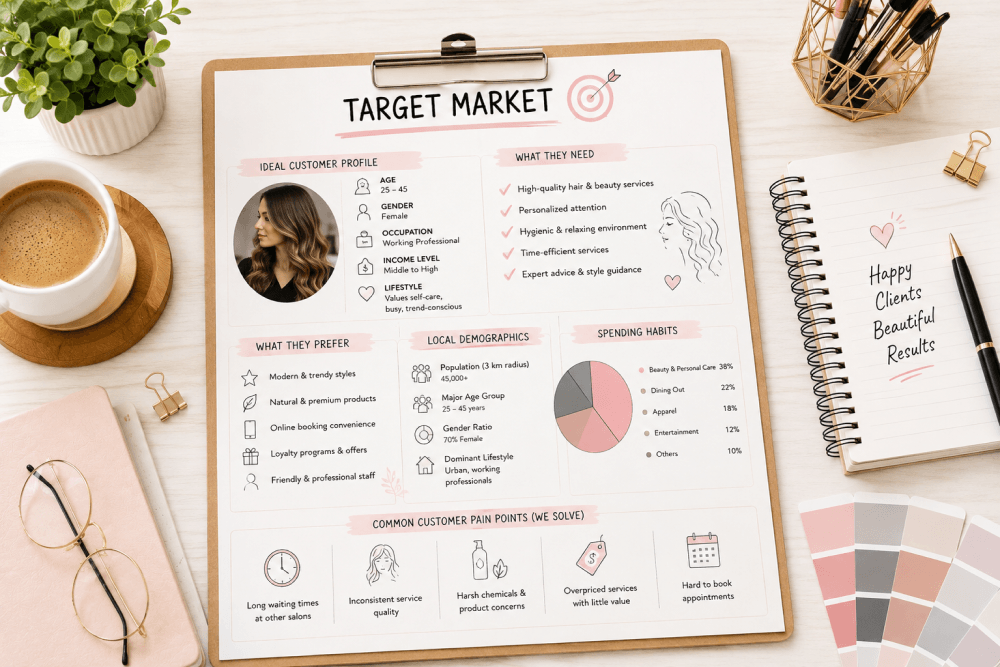
Define your ideal customer profile in detail. What do they need? What do they prefer?
Study local demographics near your salon. Look at spending habits in your area. List common customer pain points your salon can solve.
4. Research Your Salon Competitors
Identify direct competitors near your location. Also list indirect competitors like home-based stylists.
Compare their services and pricing. Study their customer reviews for strengths and weaknesses. Look for gaps in the market you can fill. Then define your competitive advantage. This is what makes your salon different.
5. List Your Salon Services and Pricing
Break your services into clear categories:
Hair services
Beauty and skincare services
Nail services
Spa and wellness services
Add any packages or memberships you plan to offer. List retail products you want to sell too.
Set your prices based on your costs and your market. Learn more about pricing your services for profit before you finalize your rates.
6. Create Your Salon Marketing Plan
Your marketing plan should cover branding and positioning first. Then build out your website and local SEO presence.
Add social media marketing and referral programs. Plan promotions and introductory offers for new clients. Explore salon automation tips to save time on repetitive tasks.
Include email and SMS marketing. Build loyalty and retention campaigns using marketing and reward tools. Don't forget online reviews and reputation management.
7. Plan Your Salon Operations
Operations cover the daily systems that keep your salon running. Start with appointment scheduling and staff schedules.
Plan your client check-in process and service management flow. Add inventory management so you never run short on products. Cover payments and billing using a point of sale system. Include customer communication and daily performance tracking.
8. Build Your Salon Staffing Plan
List every role you need to fill. This might include stylists and colorists. It might also include receptionists and managers.
Define hiring requirements and training programs. Plan employee schedules and performance tracking methods. Use staff and employee management tools to simplify this process. Add your commission and incentive structure. This keeps your team motivated and rewarded fairly.
9. Create Your Financial Plan
Your financial plan ties everything together with real numbers. List your startup costs and monthly operating expenses.
Add revenue projections and a break-even analysis. Build a cash-flow forecast for your first year.
Include staff costs and your marketing budget. Add equipment and inventory costs too. Track these numbers over time with salon business analytics.
10. Set Measurable Business Goals
Set clear targets you can track each month. This includes revenue targets and the number of new clients.
Track your client retention rate and average transaction value. Watch your appointment utilization and monthly profit targets closely.
Free Salon Business Plan Template
Ready to build your own plan? Copy this template and fill in each section with your own details. It follows the exact structure covered in this guide.
1. Executive Summary
Salon concept and location
Target audience and main services
Business goals and funding needs
2. Business Description
Business name and structure
Concept and positioning
Location, mission, and vision
3. Target Market
Ideal customer profile
Customer needs and preferences
Local demographics and spending habits
4. Competitor Analysis
Direct and indirect competitors
Pricing comparison
Market gaps and your advantage
5. Services & Pricing
Full service list
Packages and memberships
Retail products and pricing structure
6. Marketing Strategy
Branding and positioning
Website and local SEO
Social media and promotions
Loyalty and reputation management
7. Operations Plan
Scheduling and staff shifts
Check-in process
Inventory, payments, and reporting
8. Staffing Plan
Roles and hiring requirements
Training and scheduling
Performance tracking and commission structure
9. Financial Plan
Startup costs and operating expenses
Revenue projections
Break-even point and cash flow
10. Business Goals
Revenue targets and new client goals
Retention rate and average ticket value
Monthly profit targets
Want a deeper look at running the business side of your salon? Check out the Salon Management Guide.
Salonist: Simplify Salon Operations After You Build Your Business Plan
Your business plan defines how you want your salon to grow. Salonist helps you manage the daily operations that turn that plan into reality.
Manage Appointments From One Place
Online booking lets clients book anytime without calling your front desk. Your team gets one calendar to manage every stylist and service.
This cuts down scheduling conflicts and double bookings. Your staff spends less time on the phone and more time with clients.
Keep Clients Engaged With Automated Communication
Automated appointment reminders reduce no-shows before they happen. Follow-up messages keep clients coming back after their visit. Send promotions and client notifications without manual work. This keeps your salon top of mind between visits.
Track Sales, Services, and Business Performance
Revenue tracking shows you what's working and what isn't. Compare service performance across your menu.
Review staff performance to spot your top earners. Business reports give you the numbers your financial plan depends on.
Build Stronger Client Relationships
Detailed client profiles store preferences and visit history in one place. This helps your team deliver a personal experience every time. Loyalty programs and personalized offers keep clients returning. Explore the membership program feature to build repeat business.
Ready to see it in action? Learn more about why salon owners choose Salonist.
Common Mistakes to Avoid When Writing a Salon Business Plan
Underestimating Startup Costs
Many new owners forget hidden costs. This includes permits and insurance. It also includes equipment repairs. Add a buffer to your budget for surprises.
Setting Prices Without Research
Guessing your prices can hurt your profit margin. Research local competitors before you set your rates.
Ignoring Local Competition
Skipping competitor research leaves you blind to market gaps. Study nearby salons before you finalize your services.
Overestimating Revenue
New salons rarely hit full capacity right away. Build realistic revenue projections based on typical growth timelines.
Forgetting Client Retention
Winning new clients costs more than keeping current ones. Build retention strategies into your plan from the start.
Creating a Plan You Never Update
A business plan is not a one-time document. Owners who ignore their plan after opening often drift from their original goals.
How Often Should You Update Your Salon Business Plan?
Your plan should grow as your salon grows. Review and update it in these situations:
Before a major expansion
When adding new services
When opening another location
When your financial targets change
During an annual business review
Treat your plan as a living document. Small updates keep it useful for years.
Final Checklist for Your Salon Business Plan
Use this checklist before you finalize your plan.
Business goals defined
Target audience researched
Competitors analyzed
Services and pricing finalized
Marketing strategy created
Staffing planned
Operating costs calculated
Revenue projections prepared
KPIs established
Final Thoughts
A salon business plan is not just paperwork. It gives you a clear path for making smarter decisions at every stage.
Use the free template above to turn your ideas into an actionable plan. Then use tools like Salonist to manage the daily work that brings your plan to life.