Spa businesses need more automation than most owners realise. Once bookings, staff scheduling, retail stock, memberships, and payments are all handled separately, you're past the point where a single all-in-one system would help.
The damage from poor day-to-day systems arrives gradually, not as one obvious failure. It shows up as small ongoing problems: hours lost to admin, staff who stop trusting the tools, clients who quietly don't rebook. Buying more software doesn't fix that on its own. Choosing the right tools does.
This guide covers what actually matters when you're evaluating spa management software in 2026: what to prioritise first, and the mistakes worth avoiding before you sign another contract.
Why the Right Spa Business Tools Matter in 2026
Clients expect more convenience than ever. Owners don't have spare hours to switch between tools that are meant to be saving them time in the first place.
Shifting Customer Expectations in the Spa Industry
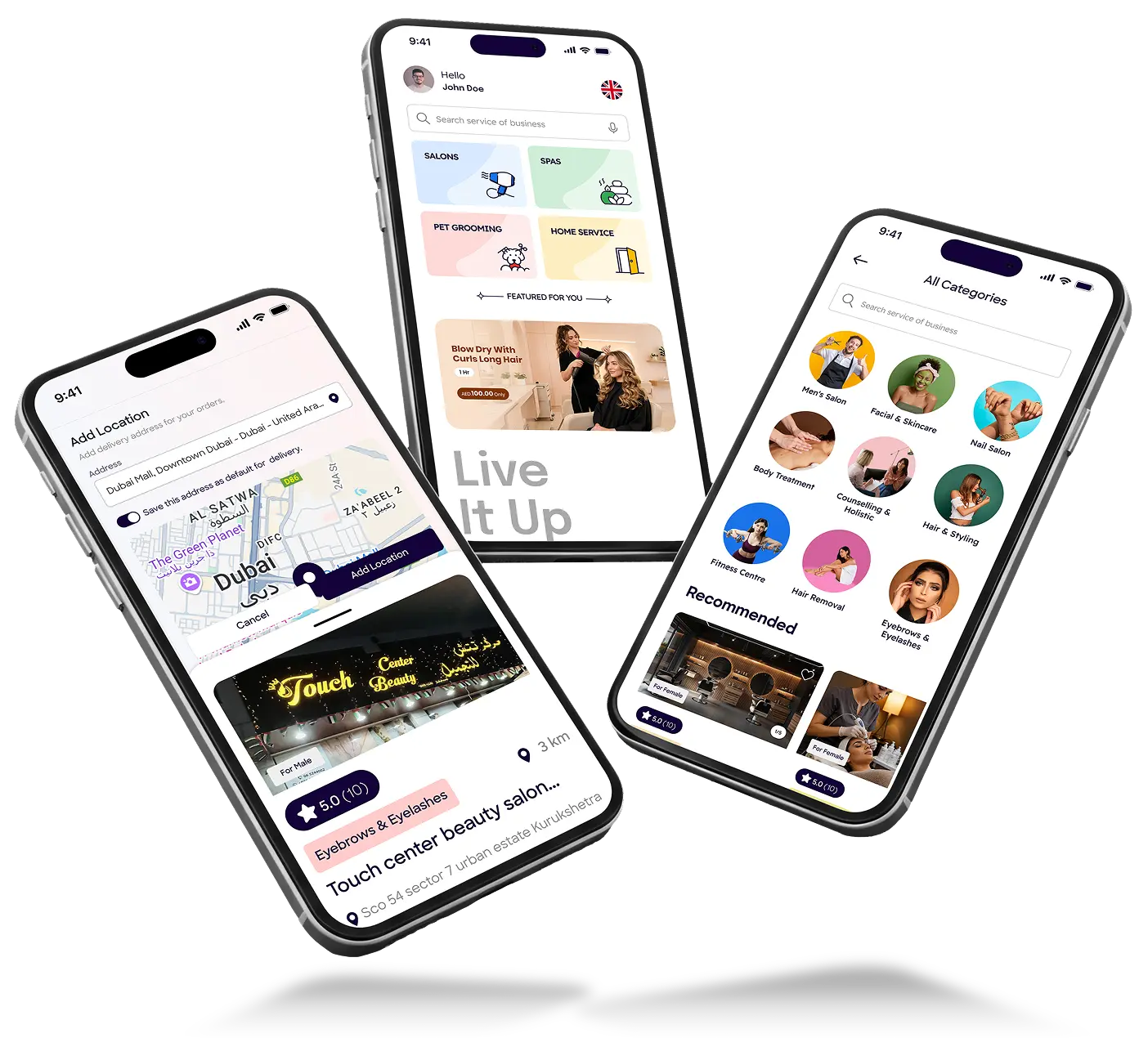
Clients book a facial or a massage the same way they book a flight: instantly, from a phone, without waiting on hold. They expect prompt confirmation, a reminder before the appointment, and an easy way to reschedule.
When a spa doesn't offer that, clients rarely complain. They just book somewhere else next time.
The Growing Importance of Connected Business Management
Running a spa involves far more than delivering treatments. In a single day an owner might handle staff schedules, retail inventory, membership billing, and a marketing campaign. Spreading that across disconnected tools means information stops flowing between the parts of the business that need it.
Benefits of Proper Spa Management Software
The right tools save time by cutting out repeated data entry. You type something once, not three times across three systems. They save money too, since you're not paying for overlapping subscriptions or covering the cost of mistakes that shouldn't have happened.
Remembering a regular's usual therapist, or what they booked last time, stops depending on one staff member's memory and becomes part of how the system works.
What to Look for When Choosing Spa Business Tools
Identify your problems first, then compare solutions.
Usability for Staff and Clients
If booking an appointment requires a manual, something is wrong. Staff won't bother, and neither will clients. A booking page that isn't immediately clear gets abandoned halfway through. Savings on the back end mean little if half the team avoids the system.
Appointment Scheduling and Calendar Management
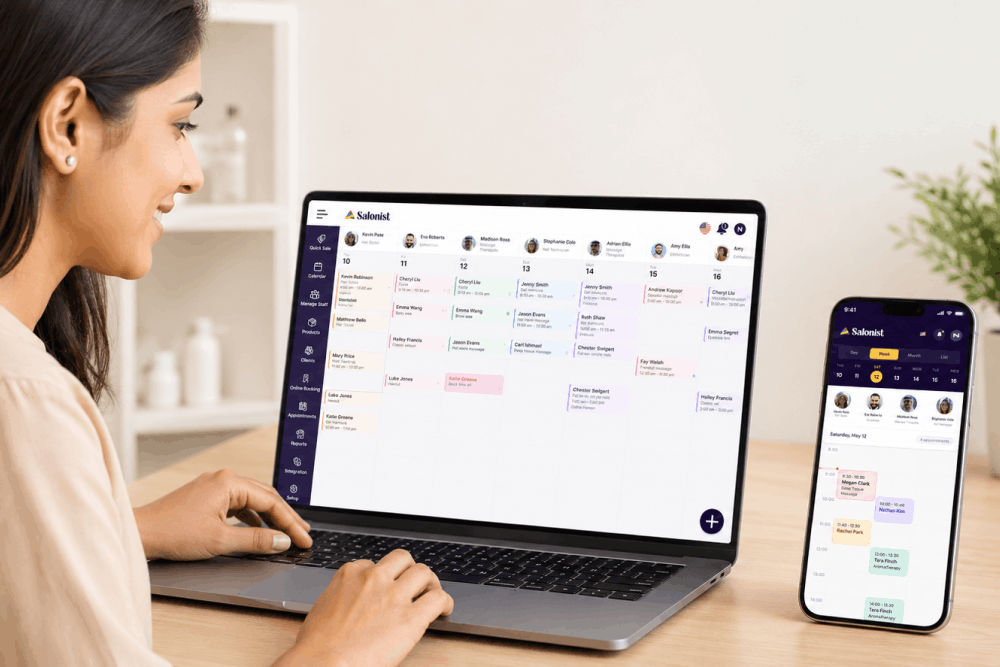
The calendar is the core of the operation. It needs to handle staff, rooms, equipment, service duration, and buffer time, and sync in real time across your website, mobile app, and front desk. Without that, two clients end up booked into the same room.
Customer Management and Personalised Service
Turning a first-time client into a regular depends on knowing their history and preferences, and on staff being able to see that while booking. It shouldn't be buried in a paper file or a notebook that stopped getting updated months ago.
Payments, Billing, and Revenue Tracking
Spas take payment in more forms than most businesses: cash, cards, packages, gift cards, memberships. All of it needs to land in one ledger rather than four, so you can read the day's performance without pulling figures from three places.
Marketing and Customer Retention Features
Automated reminders, birthday offers, and win-back campaigns for lapsed clients. Retention tools usually matter more to long-term margins than anything aimed at new faces, since keeping an existing client costs a fraction of finding a new one.
Reporting and Business Analytics
Owners need to see which services make money, which staff are performing, when demand peaks, and how fast stock moves. None of that should require building a spreadsheet from scratch every month.
Integrations With Your Existing Systems
A tool that won't talk to your accounting software, payment processor, or marketing platform creates manual work rather than removing it. Check the available integrations before you buy, not after you've committed to a year of payments.
Essential Tools Every Spa Business Should Consider in 2026
Once you know what to look for, it helps to see those criteria broken into actual categories. Here's what most spa businesses end up needing, in one form or another.
Spa Appointment Scheduling Software
Appointment scheduling handles bookings, calendar views, staff planning, and reminders. It's almost always the first system a spa puts in place, and it sets the tone for everything added afterwards.
Customer Relationship Management (CRM) Tools
Client records hold contact details, service history, preferences, and purchase behaviour. This is what makes personal service possible at scale, instead of depending on whichever staff member happens to remember the client best.
Point-of-Sale and Payment Systems
A point of sale processes in-person and online payments, handles package and membership billing, and deals with gift cards and refunds, without a separate card reader system running alongside.
Staff Scheduling and Management Tools
Shift planning, time tracking, commission math, and payroll all live in staff management. For a spa with a handful of people working different hours, getting this right saves several hours of admin every week.
Marketing and Communication Platforms
Email and SMS campaigns, appointment reminders, and loyalty updates. The point is steady contact with clients that doesn't depend on someone remembering to hit send.
Inventory and Product Management Software
Tracks stock for retail products and treatment supplies, and flags when it's time to reorder. Running out of a core product on a Wednesday afternoon is a solvable problem, not something to live with.
Accounting and Financial Management Tools
Tracks revenue and expenses and supports tax preparation, ideally connecting straight into your bookkeeping system so financial reports stop being their own monthly project.
Salonist: A Complete Solution for Managing Your Spa Business
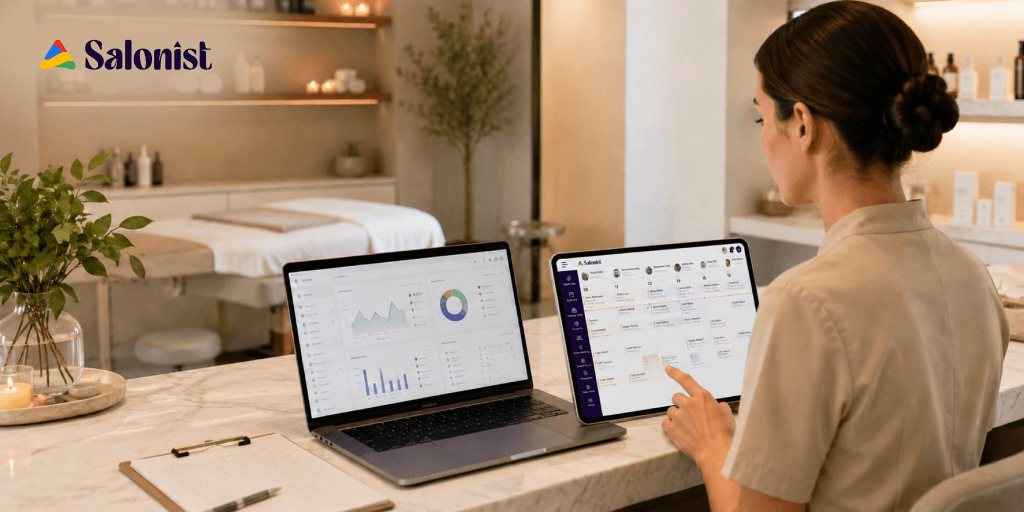
Rather than running all seven of those tools separately, plenty of spas fold everything into one platform built for this kind of business. Spa management software like Salonist covers most of the categories above from a single dashboard instead of seven separate logins.
Manage Appointments, Employees, and Customers From One System
Bookings, staff calendars, and client records sit in one place, so nothing needs entering twice. A client books online and the front desk sees it on the calendar immediately.
Simplify Payments and Daily Operations
Point of sale, payment processing, payroll, and commissions are part of the same package. That's several fewer systems to touch just to close out the day.
Build Stronger Customer Relationships
Automated reminders, birthday messages, and loyalty points for regulars keep contact steady. Clients notice the attention. They rarely notice that a system is what remembered them.
Use Business Reports to Make Better Decisions
Reports on sales, bookings, and retention give owners a straight read on what's working, without digging through separate spreadsheets each time a decision comes up.
Questions to Ask Before Investing in a Spa Business Tool
These questions tend to be more useful than any feature list.
Is This Tool Solving an Actual Business Problem?
It should fix something specific in your operation. If you can't describe that problem in one sentence, it's worth pausing before you buy.
Can Your Team Learn It Quickly?
If staff need weeks to learn something that should take days, adoption stalls and the investment never pays back. Watch how they actually move through the screens during a trial.
Will It Scale With Your Spa?
Think about where the business will be in two years: more staff, more services, maybe a second location. A tool that fits only today's version of your spa is a decision you'll be revisiting sooner than you'd like.
Does It Have Reliable Customer Support?
Software tends to break at the worst possible moment, mid-rush on a Saturday. How fast support responds matters as much as how well the product runs normally.
Is the Pricing Clear?
Watch for per-seat charges, add-on fees, and features locked behind a higher tier you didn't realise you'd need. A starting price that doesn't match the real monthly bill is one of the most common surprises in this category.
Does It Protect Customer and Business Data?
Client records usually hold contact details, payment information, and sometimes health notes. That data needs real security behind it, because a breach costs far more than any subscription.
Common Mistakes to Avoid When Selecting Spa Management Tools
Even careful buyers make the same few errors. Knowing them is usually enough to avoid them.
Choosing Too Many Disconnected Tools
One tool for scheduling, another for payments, a third for marketing. Each might work well alone. Together they create more admin, not less, because someone still has to connect them by hand.
Picking Software on Price Alone
The cheapest package rarely covers what you need, and the gap gets filled with workarounds that cost more in staff time than the saving was worth.
Paying for Features You Don't Need
Enterprise platforms built for large chains can bury a single-location spa in complexity it will never use. Bigger isn't better when most of what you're paying for sits idle.
Ignoring the Customer Experience
It's easy to choose a tool that suits staff on the back end while missing how clunky it feels for a client trying to book. That trade-off undermines the reason for upgrading.
Failing to Check Scalability and Integrations
A tool that works in isolation, or can't grow with the business, becomes a second migration project a year or two later. Check this before you buy. The Salonist blog goes deeper on evaluating integrations.
Spa Technology Trends for 2026 and Beyond
Worth tracking regardless of how big your spa is today.
Personalisation and Automation Through AI
Service and product recommendations based on a client's history are becoming standard rather than novel, as are automated follow-ups. None of this replaces staff judgement. It removes the manual work sitting around it.
Mobile-First Booking and Communication
The whole journey now runs on a phone, from the first search through to the appointment reminder.
Data-Driven Spa Management
More owners are setting staffing levels, prices, and promotions from real data rather than instinct. That puts a premium on tools that present data in a form you can act on.
Integrated Tools for a Better Client Experience
The client experience runs from browsing to booking to reminder to visit to rebooking. It increasingly needs to feel like one continuous thread, and clients notice when it's five disconnected systems stitched together instead.
Six Criteria for Choosing the Right Spa Tools
Check every option against these before deciding.
- Functionality. Does it meet the needs you've identified?
- Ease of use. Can staff pick it up on day one, and can clients book without confusion?
- Scalability. Will it hold up if you add a location, more staff, or a new service line?
- Integration. Does it work with the accounting, payment, and marketing tools you already rely on?
- Security. Does it protect client and payment data well enough that you'd be comfortable explaining how, to a client, face to face?
- Cost and ROI. Does the full cost, add-ons included, match what it saves you in time and money?
For a broader view of running the business around these tools, the spa management guide covers operations, staffing, and client experience in more depth.
Choosing Tools That Work Together
The spas that get the most out of 2026 won't be the ones running the most software. They'll be the ones whose tools work as a single system: scheduling feeding payments, payments feeding reporting, marketing running on real client history instead of guesswork. That's the bar worth holding any tool to, Salonist included.
If you're still managing booking, payments, and client records in systems that don't talk to each other, the fix isn't another tool. It's one that removes you as the go-between. See how Salonist brings spa operations into one system.
FAQs
What software does a spa business need?
At minimum: appointment scheduling, client records, and a point of sale. Most spas also need staff scheduling, inventory tracking, marketing and reminders, and reporting. These can be seven separate tools or one platform covering all of them, and the second option usually creates less manual work.
How much does spa management software cost?
Pricing normally runs per month, often scaling with the number of staff or locations. The headline figure matters less than the full picture: per-seat charges, add-on modules, payment processing fees, and features locked to higher tiers. Ask for the total monthly cost for your actual setup before comparing options.
Is an all-in-one platform better than separate spa tools?
For most single-location and small multi-location spas, yes, because the data moves between functions without anyone re-entering it. Separate best-in-class tools can make sense at larger scale or where a specific need is unusually demanding, but only if they integrate properly.
What should I check before buying spa software?
Whether it solves a problem you can state in one sentence, how quickly staff pick it up, whether it scales to where the business will be in two years, how fast support responds, what the full price includes, and how client data is secured.
How long does it take to switch spa management systems?
It depends mostly on how much client and appointment history needs migrating and how clean that data is. Ask any vendor you're considering who handles the migration, what they move across, and how long their typical onboarding runs for a spa your size.
Do spa clients really care which booking system I use?
They don't care about the brand, but they notice the experience. A booking page that's slow or confusing gets abandoned, and missing reminders lead to missed appointments. The system is invisible to clients when it works and very visible when it doesn't.