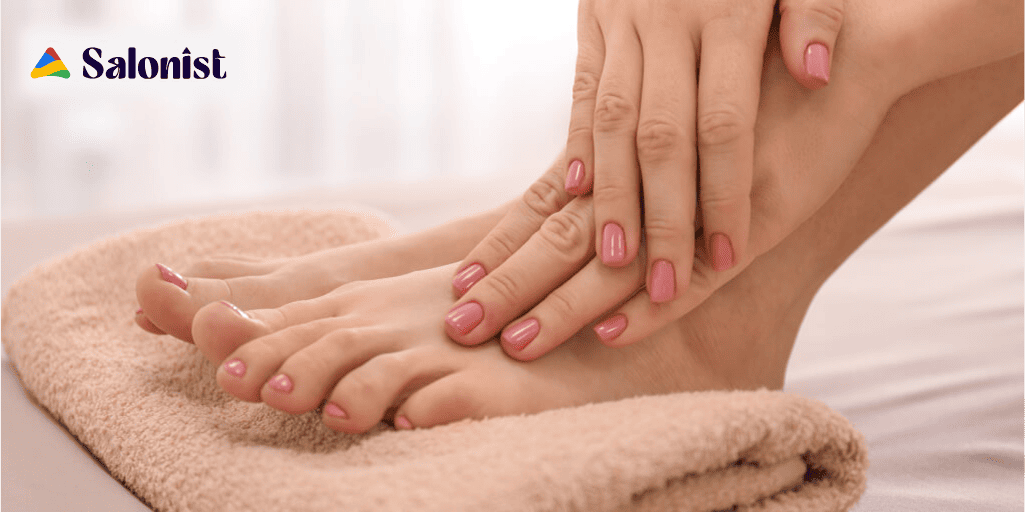
Regular manicures and pedicures keep nails trimmed and skin exfoliated. That lowers the risk of ingrown nails and cracked heels. The massage element eases tension. Most people benefit from a treatment every two to four weeks.
Nail treatments are usually sold on appearance. The practical benefits are what keep clients coming back.
Here is what each treatment actually does and how often it is worth booking.
What Each Treatment Involves
| Manicure | Pedicure | |
|---|---|---|
| Area | Hands and fingernails | Feet and toenails |
| Typical length | 30 – 45 minutes | 45 – 60 minutes |
| Key steps | Soak and shape and cuticle care and massage | Soak and callus work and shape and massage |
| Main practical gain | Prevents hangnails and rough cuticles | Prevents cracked heels and ingrown toenails |
| Suggested frequency | Every two to three weeks | Every four to six weeks |
9 Benefits Worth Knowing
1. Lower Risk of Ingrown Nails
Nails cut and shaped correctly are less likely to grow into the surrounding skin. Ingrown toenails are painful and can become infected.
This is the single most practical reason to book a pedicure regularly.
2. Cleaner Nails and Skin
Hands and feet collect dirt and bacteria all day. A proper treatment cleans under and around the nail.
Good hygiene lowers infection risk. It does not guarantee prevention and no treatment can promise that.
3. Smoother Skin
Exfoliation removes dead skin from hands and feet. Callus work on the heels prevents cracking which is painful and slow to heal.
4. Healthier Cuticles
Cuticles are gently pushed back and moisturised rather than cut aggressively. Dry cuticles split and those splits let bacteria in.
Moisturised nails are also less brittle and less likely to snap.
5. Fewer Breakages
Shaping and buffing removes the rough edges where splits start. A shorter well shaped nail lasts far longer than a long uneven one.
6. Better Circulation and Less Tension
The massage element eases muscle tension in the hands and feet. Many clients say this is the part they book for.
7. Time to Switch Off
Thirty minutes of sitting still with no phone is genuinely restful. That matters to clients who never otherwise stop.
8. A Second Pair of Eyes
Experienced technicians notice changes in nails and skin. Discolouration and unusual thickening are worth mentioning to a doctor.
A technician cannot diagnose anything. They can suggest you get something checked.
9. Confidence
Well kept hands are noticed in every handshake and every photograph. Clients book before interviews and weddings for a reason.
How Often Should You Book?
- Manicure: every two to three weeks for polish and shape upkeep
- Gel manicure: every two to three weeks with proper removal each time
- Pedicure: every four to six weeks because toenails grow more slowly
- Sandal season: monthly is realistic for most people
Give nails a break from polish occasionally. Continuous wear with no rest leaves nails looking dull and dry.
What Good Salon Hygiene Looks Like?
This is what separates a safe treatment from a risky one. Look for all of it.
- Tools sterilised in an autoclave or opened fresh from a sealed pouch
- Single use files and buffers rather than shared ones
- Foot spa liners changed between every client
- Technicians washing hands between clients
- Visible licence and clean workstations
Ask how tools are cleaned. A good salon answers happily and a poor one changes the subject.
When to See a Doctor Instead?
Nail treatments are cosmetic. Some things need medical attention rather than a salon appointment.
- A nail that is thickening or lifting or changing colour
- Persistent pain or swelling around a nail
- An ingrown nail that is already infected
- Any dark streak appearing under a nail
- Diabetes or poor circulation which makes foot care a medical matter
Clients with diabetes should speak to their doctor before booking a pedicure. Many are advised to see a podiatrist instead.
For Salon Owners: Turning Benefits Into Rebookings
Nail services have the highest repeat rate of any salon category. Clients return every two to three weeks when the habit sticks.
- Rebook at the chair. Ask while the polish dries rather than at the desk.
- Explain the frequency. Clients who understand growth cycles book on schedule.
- Note the shape and shade. Store it against each client record so the next visit is faster.
- Send a reminder at week three. Automated campaigns catch people before they book elsewhere.
- Reward the regulars. A loyalty programme suits a service booked this often.
Let clients book their next slot themselves through online booking. Nail clients book late at night more than most.
Frequently Asked Questions
How often should you get a manicure and pedicure?
A manicure every two to three weeks and a pedicure every four to six. Toenails grow more slowly.
Are manicures and pedicures good for nail health?
Yes when done properly. Correct shaping and moisturising reduce breakages and ingrown nails.
Can a pedicure prevent infections?
It lowers the risk through cleaning and correct trimming. No treatment can prevent infection entirely.
Should cuticles be cut?
Pushing back gently is safer than cutting. Cuticles are a barrier and cutting them creates an entry point.
Is a pedicure safe if I have diabetes?
Speak to your doctor first. Many people with diabetes are advised to see a podiatrist rather than a salon.
How do I know a nail salon is hygienic?
Ask how tools are sterilised. Look for sealed pouches and single use files and fresh foot spa liners.
Final Thoughts
The appearance is the reason people book. The upkeep is the reason they keep booking.
Choose a salon that answers hygiene questions without hesitating. Then book on a schedule rather than when nails already look bad.
Salon owners can find nail salon software useful for keeping shapes and shades and rebooking dates in one place.
This article is general information only. It is not medical advice. Speak to a doctor or podiatrist about any nail or foot condition.