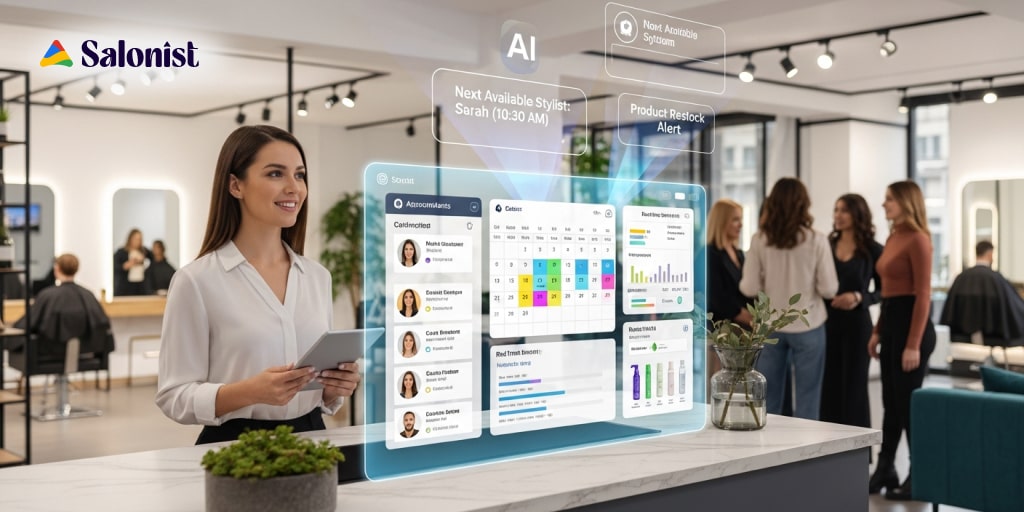
Each hour a stylist or front desk manager works to track down a no-show or to recreate the following week's schedule by hand is one hour they aren't working on clients or sales. None of that work needs a trained professional. All of it still has to get done. That gap, between what actually requires a person's judgment and what's just repetitive administration, is where AI for salon management has quietly moved in.
Salon owners aren't just curious about AI anymore. It is already being used for bookings, reminders, marketing, and staffing. It is not intended to replace stylists or front-desk staff. It's to clear the repetitive work off their plates, so there's more time for clients and revenue.
In the following article, we will briefly discuss nine ways AI is helping manage salon operations more efficiently and replacing manual processes, so professionals can focus on building a loyal client base for ongoing business growth.
How Technology and AI Are Reshaping Salon Operations
Some of these will sound familiar. A few might surprise you. Below is a list of 9 ways in which salon owners have been integrating AI into their day-to-day activities from the first booking until the report.
1. AI Driven Appointments Booking
Previously, customers had to wait until the salon opened before booking an appointment for their service. But with modern appointment booking software, customers can:
- Book their appointment slot anytime, anywhere from their phones or web links.
- Customers can select their convenient visit time and services in advance.
- There is no need for callbacks, and the software will help send automated notifications to clients to make sure that they do not forget about their appointment.
There is the possibility of using AI to find out the patterns of the actual filling of a calendar: which services are booked consecutively and which periods stay untouched every week.
The upshot for owners is simple. More bookings land, and nobody has to sit there managing every request by hand.
2. No-shows Prediction and Prevention
Professionals may find themselves irritated by having to have their equipment and skills prepared for the person who never showed up. By incorporating smart salon software, owners can:
- Analyze reports and patterns based on customers' past visits to identify appointment type.
- Send appointment reminders and weekly offers to customers to incite them and reduce the chances of no-shows.
- Tailor services to clients according to their visit history rather than assumptions.
Timeliness is critical to success. If there is a chance that someone won't show up a day or two prior to the appointment, then the salon can either secure the appointment or schedule another person in the open time.
3. Personalized Service Recommendation
When a customer visits your salon for the second time for the same service, it's obvious that you've earned the customer's trust. With the assistance of AI and a connected customer management system, you can now:
- Personalise customer service before they even tell you what they want. This creates a feeling among clients that your salon remembers their preferences and makes them more comfortable.
- Create an opportunity for upselling. For example, if a customer walks in for a simple haircut, you can offer a spa service or blow dry styling. These services entice customers to try a service once.
- Based on the client's skin type or the type of hair they have, you may recommend specialized items such as shampoos and creams and encourage them to experiment.
But keep in mind that the use of AI technology should complement that of the stylist and not substitute for their expertise. Improved personalization might present chances of increased customer satisfaction and sales.
4. Chatbots to Facilitate Customer Communication at Any Time
Many individuals tend to browse online at late night hours or even during non-business hours. But how would they get answers to any of their questions when no one from your team is around?
An AI assistant is the fix. Here's how it helps:
- AI assistants never sleep. So, if your customer has any booking-related, service, or general query, your personalised assistant can help anytime of the day.
- Assistants don't work based on usual business hours. Customers can easily ask pricing questions, stylists' availability, and cancellation steps with just a few taps.
- AI keeps appointments safe and secure, unlike people who can miss a few things from their minds. It keeps track of repetitive information, client preferences, and history.
The goal isn't simply "having a chatbot." The value comes from faster customer response without increasing front-desk workload.
5. Smarter Salon Marketing
Marketing is the major thing attracting customers to your salon. But with busy schedules, it can be a bit difficult to create a regular online presence. AI is helping salon owners create and optimize marketing campaigns faster. Let's see how:
- You can use AI to plan your social media posts and campaigns, test your offers, and see which campaigns have generated bookings.
- You can segment your customers into distinct groups like new customers, frequent customers, and dormant customers using AI.
- A win-back offer is not useful for someone who just booked last week. A loyalty reminder does not help someone who has never booked before. Curating personalised offers and messages can eat hours of a day. Let AI handle that for you.
That's real money saved twice over. Reduced time spent on campaign development, as well as reduced expenditure on an incorrect target group.
6. Forecasting Busy Times and Customer Demand
A salon's booking history and analytics already hold most of what an owner needs to plan ahead. Spotting the pattern by eye just takes time nobody has. AI does it faster. It uses past appointments to project which days run busy, which hours go quiet, how demand shifts by season, and which services are trending up or down.
A forecast only matters if it changes a decision, though. Paired with staffing, it tells an owner when to book an extra colorist and when to skip coverage nobody needs. Paired with the booking calendar, it helps set client expectations before they even walk in.
Nobody's chasing a perfect prediction here. The real goal is avoiding two costly mistakes: too many staff standing around on a dead Tuesday, and too few hands when Saturday afternoon fills up faster than expected.
7. Optimizing Staff Scheduling
Your staff members are among the most valuable assets for your company. Staff scheduling is complex in large salons. AI helps manage resource allocation more efficiently by:
- Every professional has a different skill set. AI lines up staff members based on their skills and assigns them to the right counters.
- Based on appointment volume, AI matches customer demand with the right staff capacity. This reduces scheduling conflicts and unnecessary downtime.
8. AI-Powered Customer Experience and Queue Management
Walk-ins remain important for many salons. AI can help salons manage the customer journey from arrival to service.
- By enabling digital check-ins or joining via virtual queuing, customers can receive a notification that their chair is ready and a professional is all set to serve them.
- Customers can check their estimated wait times and wait remotely from anywhere until their turn arrives.
- Salon management software connected with a queuing system can improve operational visibility, and front desk staff have a clear picture of all those who have been served and who all are still waiting.
9. Understanding Customer Behavior and Salon Performance
Every booking, every cancellation, every repeat booking is a piece of data. Using AI, your data on bookings and customers will help make your business decisions.
- It will enable you to gain insight into your customer retention, their frequency of visits, your income-generating services, booking cancellations, and peak demands.
- Salons already have plenty of data. Using it to examine the insights is the major challenge. Get this right, and three questions get a real answer instead of a guess: What's working. Where money is leaking out. Where the next bit of growth is most likely to come from.
With AI for understanding customer behavior and salon performance, owners gain a clearer picture of what's working, where revenue is leaking, and where growth opportunities exist.
What AI Isn't Replacing in a Salon
A salon that starts to feel run by algorithms has gone too far. That's not where any of this is heading. AI is good at clearing out repetitive admin work. It's not good at the reasons clients actually walk through the door.
A stylist's trained eye. A colorist's creative call on a tricky correction. An esthetician's read on what a client's skin needs this week. None of that comes from software. Nor does the building of a relationship that turns a first-time visitor into a five-year regular. Nor does the patience required to deal with a client who hates their new haircut. Judgment calls that mix technical skill with a read on the person in the chair still belong to the person in the room.
The salons getting the most out of AI aren't cutting the human part of the visit. They're clearing the friction around it: the calls, the reminders, the schedule. That leaves more time for the part only a person can do.
How to Start Using AI in Your Salon
Trying to adopt everything in a month usually backfires. Salons that get real value from AI for salon management tend to follow a similar, fairly unglamorous path.
- Find the repetitive work first. Look at where staff time goes without improving the client's experience: the phone calls, the manual reminders, the schedule rebuilt from scratch every week.
- Pick one workflow to start with. Booking, reminders, marketing, and customer communication are common starting points. They're easy to measure and quick to show results.
- Connect new tools to what's already running. A tool that doesn't talk to the point of sale or the client list becomes another disconnected system. That's more work, not less.
- Track the numbers that matter. Booking conversion, no-show rate, staff utilization, retention, revenue per client, and wait times will show fast whether something's working.
- Expand once it's proven. After one process demonstrates its success, deploy the AI to the next phase of the client journey. Not everything should be automated at once.
Want a closer look at how salons usually sequence this? Salonist's blog covers more of these workflows in detail.
How Saloni AI Helps You Manage Booking to Payment, All in One Place
Everything above is a category of AI use, not a specific product. AI like Saloni AI is another alternative. Employed by over 15,000 salons and spas throughout the world, Salonist AI manages all your booking, payment, and marketing needs from a single source instead of several different sources.
Manage Bookings Without the Back-and-Forth
Clients book online any time. No special configuration is required for repeat visitors, deliveries, and memberships. Automated confirmations ensure that you will have fewer booking conflicts, and your calendar will be up to date at all times.
Keep Your Customer Engaged Before They Visit You
Automatic reminders and marketing are sent via SMS, WhatsApp, or email before your customer visits you, as well as reminders afterwards.
Make Check-In and Service Management Easier
Appointments and walk-ins sit in the same calendar view, with client history and service assignment attached to every visit. Front-desk staff can see who's arrived and who's next without switching screens.
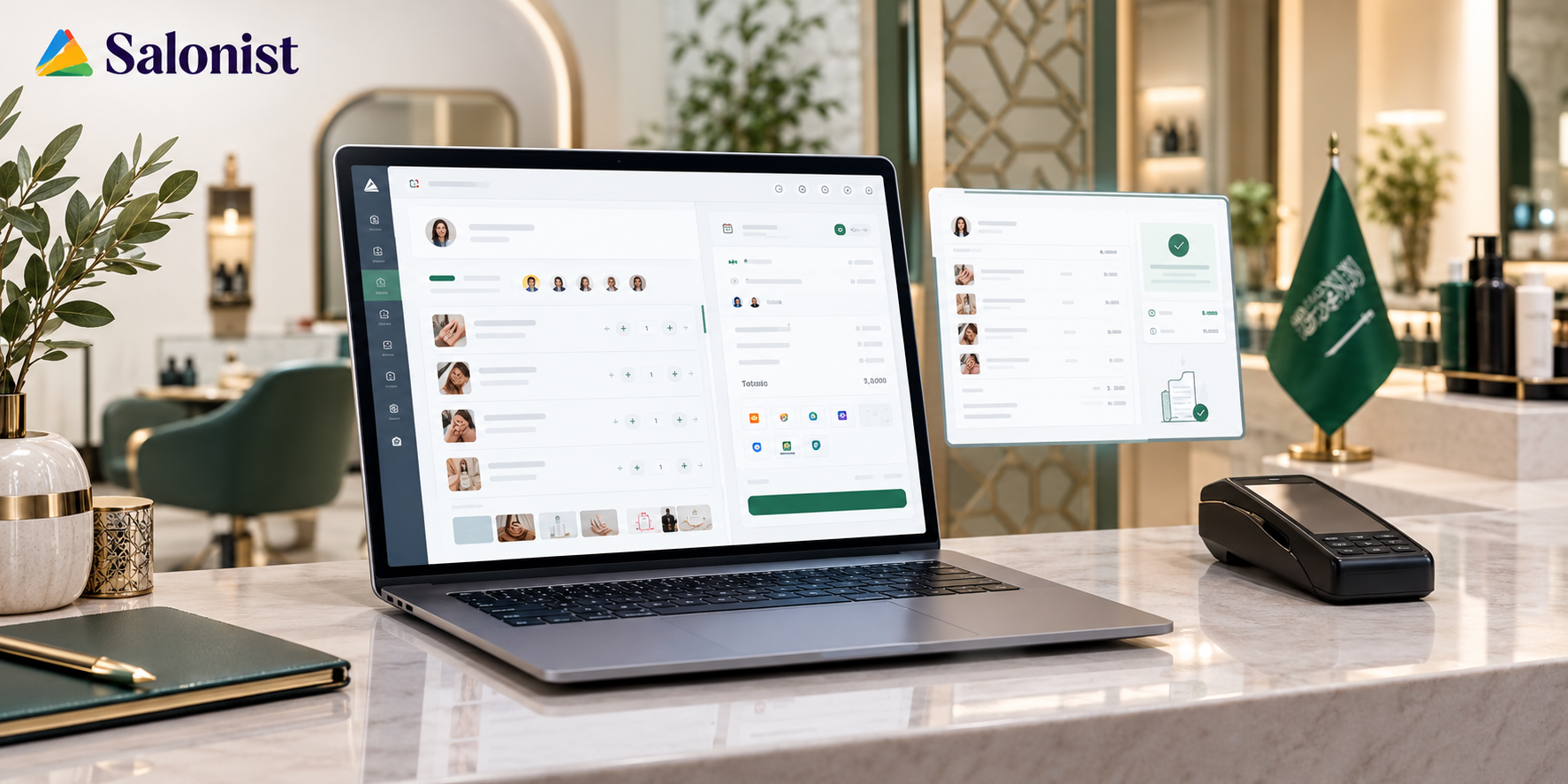
Move From Service to Payment Smoothly
Point-of-sale tools track the services provided, let staff add on products or extras, and take payment through integrated gateways. The sale stays tied to the client's record the whole time.
Use Customer Data to Make Better Decisions
Booking trends, popular services, staff performance, and repeat-client patterns roll into reporting. Owners get a working view of the business instead of a spreadsheet built by hand at month's end.
The Future of AI in Salon Management
This isn't finished evolving. The next phase involves less about innovation of new features, and more about integration of existing features into the systems currently being used by salons. Booking, messaging, payments, and customer data will function as one, rather than as a stack of unrelated systems next to each other.
A few directions are already visible. Predictive retention that flags clients at risk of drifting away before they stop booking. Deeper personalization that adjusts as a client's history grows. Voice-based booking for clients who'd rather talk than tap. Workforce planning that adjusts closer to real time. And, where it's offered and clearly consented to, computer vision or facial analysis to support skin and hair consultations.
None of it replaces the fundamentals. It just means the systems running underneath a salon's day will keep getting quieter, and better at staying out of the way.
Final Thoughts
AI isn't valuable to salons because it's futuristic. It's valuable because it solves problems salons have always had. Missed appointments. Empty slots. Long waits. Repetitive questions. Guesswork scheduling. Customer experiences that don't connect from one step to the next. That's nothing new. What's changed is that salons finally have a practical way to close the gap between work that needs a professional's judgment and work that doesn't.
That's where a platform like Salonist fits in, not as a stand-in for the salon's team. It's the layer underneath bookings, reminders, check-in, payment, and customer data, so less depends on someone remembering to follow up. Ready to trade appointment chaos and scattered tools for a process your team can actually manage? Explore how Salonist can help.