Most salon growth plans start with one question: how do we book more clients? It's the obvious lever, so owners chase it. More ads. More referral pushes. More hours added to the calendar. Meanwhile, the clients already sitting in the chair are buying less retail than they could. Nobody's tracking it closely enough to notice.
Retail is the quiet revenue stream inside every appointment you already have booked. The client who has spent 45 minutes trusting you with their hair will be much more willing to consider your product recommendations than someone browsing through an advertisement. The difference between the salon where retailing is considered an afterthought and a business where retail is run as a process can easily amount to $10,000 per year.
This blog covers where that revenue actually comes from, the salon retail sales tips that move the needle, and how to increase salon revenue without turning every checkout into a sales pitch.
What Are Retail Upsells in a Salon?
A retail upsell isn't a hard sell tacked onto the bill. Here's what separates a good suggestion from a pitch, and why the difference matters more than owners think.
Why Current Clients Are Your Greatest Retailing Asset?
Your current client sitting in your chair trusts you with the scissors. You earned that trust over months, perhaps even years. It doesn't reset every visit. Your stylists know this client's hair type, their color history, and what bothered them last time. A first-time shopper browsing a retail shelf has none of that.
New clients cost money to find. Ads, referral incentives, time spent on a consult that might not convert. Recommending a $22 conditioner to someone already in your chair costs almost nothing beyond a good, well-timed nudge.
Retail Sales vs. Service Revenue
Service pricing has a ceiling. If your price for haircuts is too high, people will start comparing your services to those at the nearby hair salon. Our guide on pricing salon services for profit covers that ceiling in more detail if you haven't mapped your own yet.
Retail doesn't hit that same wall. The product comes along with the service rather than competing against it. A $180 color service along with a $24 retail upsell can be done at the same time. They just land on different revenue lines.
How Salons Can Add $10K+ Without Booking More Clients?
The math here is simpler than most owners expect. Here's the formula, plus why small purchases add up to real annual revenue.
The $10K Retail Revenue Formula
Four numbers drive retail sales for salons:
- Number of active clients
- Percentage of clients who buy something
- Average retail transaction value
- How often they buy again between visits
Why Small Upsells Can Have a Big Financial Impact
A $10 product recommendation feels small in the moment. Multiply it across hundreds of appointments a month, and it isn't small anymore. A $20–$30 add-on. A simple two-product bundle. A repeat purchase between visits. None of these need a bigger service menu or a longer day. They just need someone to ask.
8 Salon Retail Sales Tips That Actually Work
These habits separate salons with a real retail plan from ones where product just sits on a shelf.
1. Base the Pick on the Service
Tie every pick to what just happened in the chair. A client who got a color service is close to the easiest sale you'll make all day: a color-safe shampoo. You are not guessing at a need. You are solving one that is ten minutes old.
2. Let Staff Educate Instead of Sell
"You should buy this" sounds like a pitch. "The reason that your color lasts longer with this is" implies giving advice. Train employees to explain the "why" and "how" instead of the "what." Clients buy the why more readily than they buy the product.
3. Create a "Complete the Look" Product Strategy
Pair services with a small set of products that finish the look. It's the same instinct that sells cufflinks with a suit. Make it simple so that the clients understand instantly.
4. Use Product Bundles to Increase the Average Order Value
- Shampoo + conditioner
- Styling product + heat protectant
- Treatment + maintenance product
Bundles remove a decision instead of adding one. A client choosing between five separate bottles has to stop and think. A client choosing "yes" or "no" to one bundle doesn't.
5. Make Retail Products Visible
A shelf near the door that nobody walks past won't sell anything. Put bestsellers where clients already stand: near checkout, near the styling chair, near whatever service they connect to. Rotate seasonal products in so the display never goes stale.
6. Recommend Products Before the Client Leaves
Timing matters more than most owners think. Most clients will not ask on their own. Build the pick into the checkout chat, not as an afterthought once the card is swiped.
7. Follow Up When It Is Time to Replenish
Most retail products run out on a set schedule. Six weeks is normally the average lifetime of a shampoo bottle. This is a good time to send a short message reminding your customers to refill or reschedule. That turns a one-time sale into a repeat one. We've written before about how email and text compare for getting salon clients to respond, and the same logic works just as well for replenishment reminders as it does for booking ones.
8. Track Which Products and Recommendations Generate Revenue
You cannot fix what you do not measure. Track retail revenue per client. Track which products sell. Track which services lead to a purchase. That data shows you where to train harder and where to clear shelf space.
Turn Every Client Visit Into a Bigger Revenue Opportunity with Salonist
Retail works best when it is built into daily habits, not run as a separate push. This is where the right systems help.
Use Client Information to Provide Personalized Product Recommendations
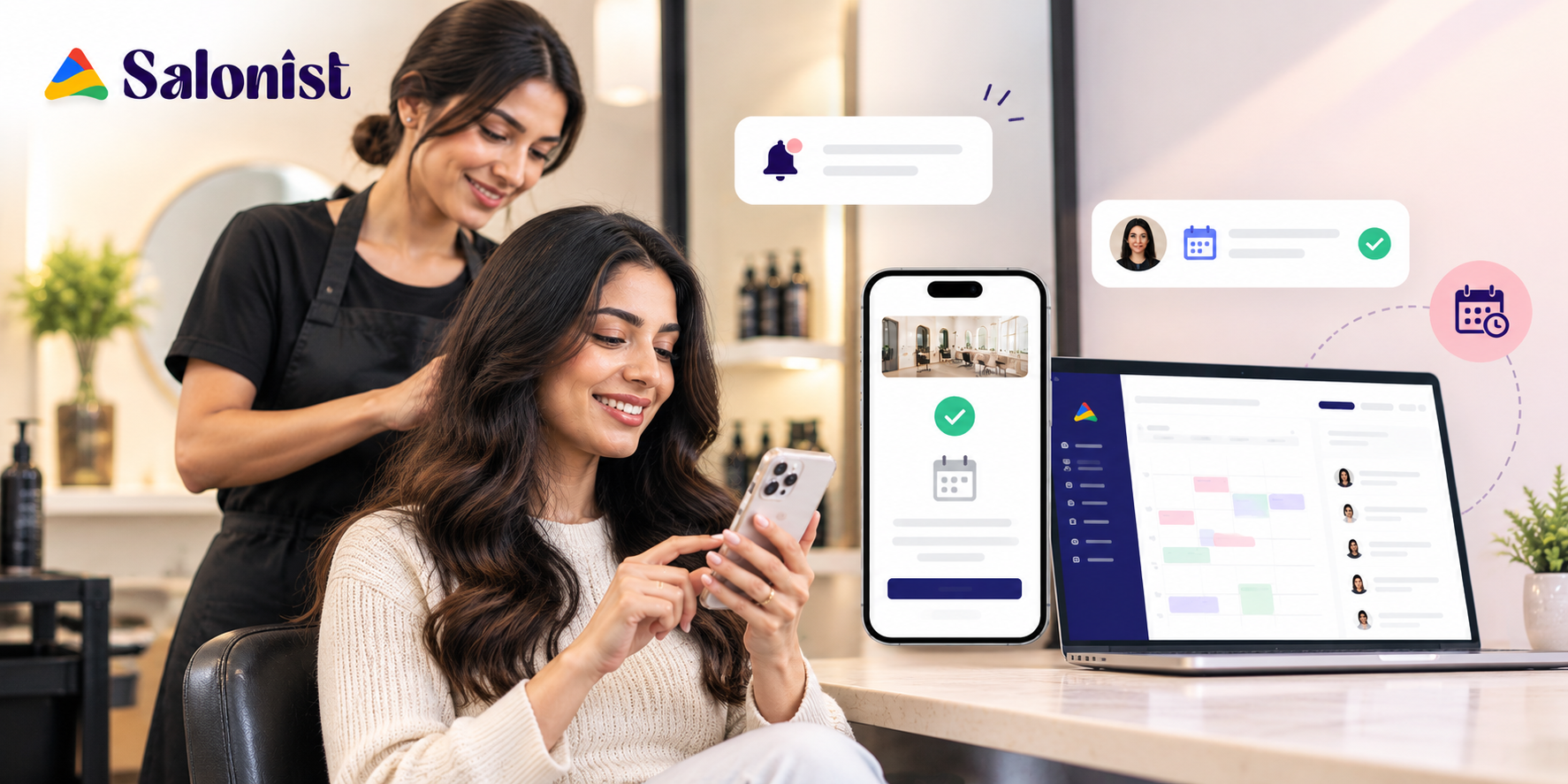
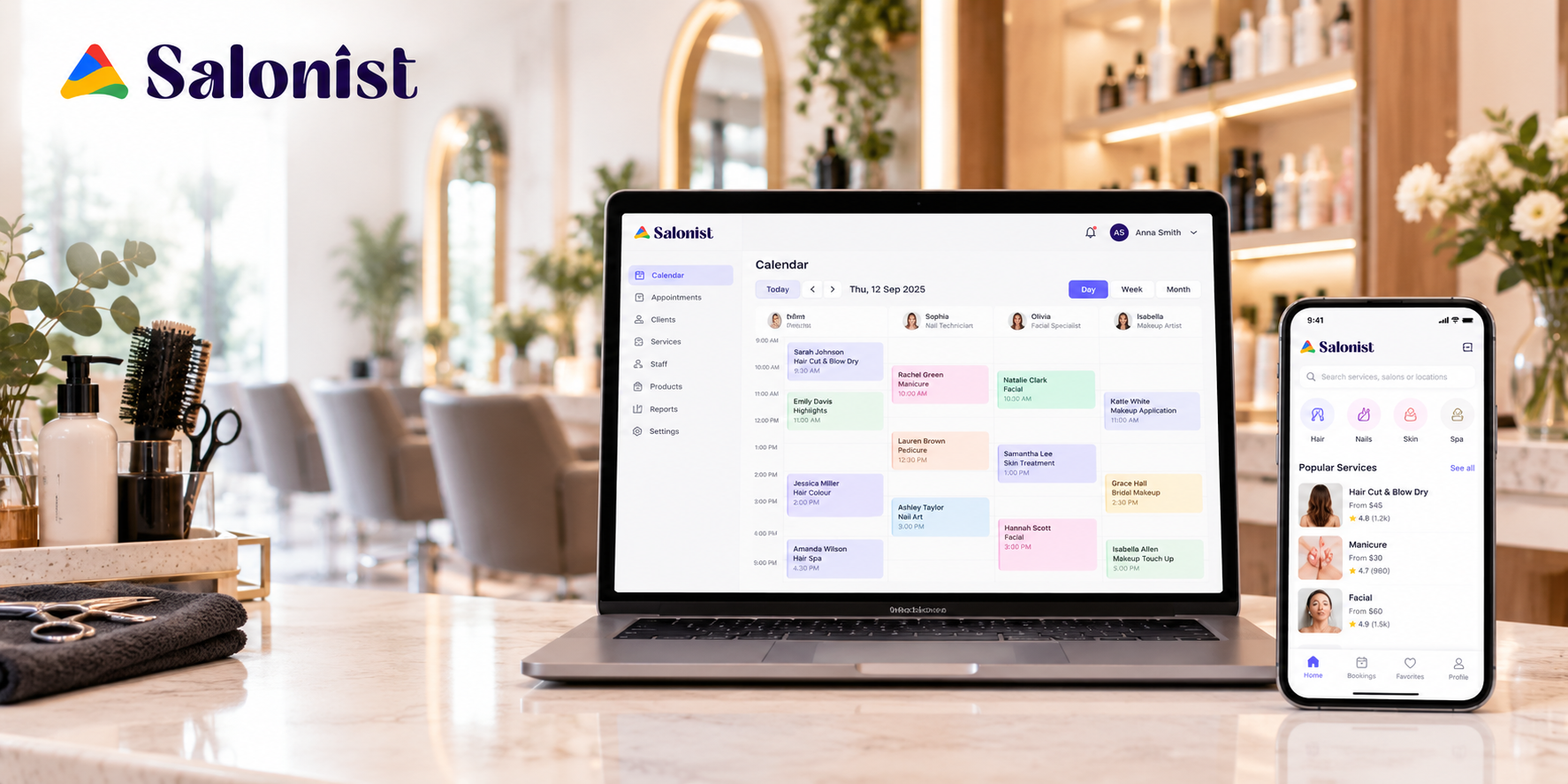
A salon management system like Salonist stores all information related to clients' service experience, previous purchases, and preferences in one location. New stylists filling in for somebody else can easily refer back to previous data rather than making an instant guess.
Send Reminders to Clients after Their Visit
Reminders are automatically sent without the need for anyone from the team to make an effort: refill your stock or remind them about future appointments. This type of customer care usually results in repeat customers. This is one of the factors contributing to the success of salon client retention.
Connect Retail With the Overall Client Journey
Appointment, service, product pick, purchase, follow-up, repeat visit. When each step links to the next, retail stops feeling like a bolt-on. It starts working like part of how the business already runs.
How to Upsell Without Making Clients Feel Pressured
Retail only works long-term if clients don't feel sold to. A few rules keep the balance right.
The "Problem → Recommendation → Benefit" Approach
Start with what the client actually needs: dry ends, frizz, color fading fast. Suggest one product that fixes it. Explain the benefit in plain words. That's the whole structure. No script needed beyond it.
When NOT to Upsell
Skip the pick when the product does not fit, when a client has already said no once this visit, or when you are tempted to add a third or fourth item in the same chat. Suggesting too much, too often, wears down the trust this whole approach needs.
Build a Salon Retail Strategy Around Your Top Services
Not every service creates the same retail opportunity. Mapping products to your service menu makes each pick feel obvious, not forced.
Hair Color Services
Color-safe shampoo, conditioner, and repair treatments pair well with any color service. Clients already understand why their color needs extra care.
Haircuts and Styling
Styling product, heat protectant, and finishing spray keep the cut looking sharp longer. That makes them an easy add-on at checkout.
Facial and Skin Services
Cleanser, moisturizer, SPF, and aftercare round out a facial or skin treatment. They give clients a way to keep the results going between visits.
How to Train Your Team to Sell More Retail
Retail sales depend more on staff confidence than on the product itself. Confidence comes from training, not pressure.
Give Staff a Few Products to Master First
Do not give out the entire retail catalogue to a recruit on the very first day. Give them just a few best-sellers or higher-margin products to begin with.
Track Retail Performance by Employee and Service
Measure who suggests what, and how often it turns into a sale. Use that data to coach, not to pressure. The goal is better recommendations, not louder ones.
The Numbers: What $10K+ in Additional Revenue Can Look Like
Actual results depend on foot traffic, pricing, and margins. But the pattern holds across salons of different sizes.
| Scenario | Clients | Buyers | Avg. Retail Sale | Revenue |
|---|---|---|---|---|
| Starter | 500 | 20% | $20 | $2,000 |
| Growing | 750 | 30% | $25 | $5,625 |
| Strong Retail | 1,000 | 40% | $25 | $10,000+ |
Take these figures as a guideline and not a guarantee. A salon that keeps its clients coming back and offers product education will perform well in retail. One that treats retail as an afterthought stays stuck in the "Starter" row, no matter how good the service is.
Common Salon Retail Mistakes That Kill Upsell Revenue
Only Selling When Sales Are Slow
Treating retail as a backup plan for slow weeks, instead of a daily habit, means it never becomes reliable revenue.
Recommending Products Without Understanding Client Needs
A generic pitch to every client, no matter what they need, reads as just that: a pitch. Clients notice.
Giving Clients Too Many Choices
An overwhelmed client usually buys nothing. One or two relevant picks beat a wall of options every time.
Failing to Train New Employees
New hires who never learn the products stay quiet at checkout. That's lost retail sales every time they're the one ringing up a client.
Not Tracking Retail Performance
Without data, you're guessing at what's working. Guessing doesn't scale past a handful of stylists.
Treating Retail as Separate From the Client Experience
Retail that feels bolted onto the service, rather than part of it, is the fastest way to make clients tune it out completely.
Turn Existing Client Relationships Into a New Revenue Channel
This does not require more clients or even more hours in the day. All this requires is greater focus on those clients who are already coming to your business: their requirements, purchases, and reminders.
Maintaining consistency and having a skilled team will transform retail into an income-generating source. The use of management software for salons, which stores client data and communications in one place, will make everything easier without adding any additional burden on staff.
Ready to see what your client base could add in retail revenue, without booking a single new appointment? Explore how Salonist can help turn every visit into a bigger opportunity.
Frequently Asked Questions
What is a retail upsell in a salon?
It is a product recommendation tied to the service a client just received, such as a color safe shampoo after a color appointment. It solves a need the stylist already identified in the chair, so it reads as advice rather than a pitch.
How much extra revenue can retail upsells actually add?
It depends on three numbers: client volume, the share of clients who buy, and average retail sale. A salon with 1,000 clients, a 40% buy rate and a $25 average sale clears $10,000. At 500 clients and a 20% buy rate on a $20 product, the same math returns $2,000.
How do I increase salon retail sales without pressuring clients?
Use a problem, recommendation, benefit structure. Name the issue the client already has, suggest one product that fixes it, and explain the result in plain words. Stop after one or two picks, and skip the recommendation entirely once a client has said no.
Which retail products sell best in a salon?
The ones that match your top services. Color clients buy color safe shampoo, conditioner and repair treatments. Cut and style clients buy heat protectant and finishing spray. Facial and skin clients buy cleanser, moisturizer and SPF.
When is the best time to recommend a product?
During the service, then again at checkout before payment is taken. Most clients will not ask on their own, and once the card is swiped the conversation is effectively over.
How do I train stylists to sell more retail?
Start new staff on a few best sellers or higher margin products rather than the full catalogue. Teach them to explain why a product works instead of what it is. Track recommendations and conversions per stylist, and use that data to coach rather than to pressure.
How often should I follow up with clients about repurchasing?
Match the follow up to how long the product lasts. A shampoo bottle averages around six weeks, so a short reminder near that point turns a one time sale into a repeat purchase and often prompts a rebooking at the same time.
Does salon software help with retail sales?
Yes. It keeps service history, past purchases and product preferences in one place so any stylist can make an informed recommendation, sends replenishment and rebooking reminders automatically, and reports which products and which staff actually generate retail revenue.