Leaving a commission-based salon feels like winning. For about a month. Then the first rent bill lands, a client cancels the morning of, and nobody else is there to cover the chair. A salon suite hands you your own room and your own rules. It hands you the bills too. Some stylists come out ahead and wouldn’t go back. Others find the freedom costs more than they budgeted. So what does a suite really involve, what does it cost, how does it compare with other setups, and which numbers should you check before signing? Let’s go through it.
What Is a Salon Suite?
Before comparing costs, get clear on what you’d actually be renting, how it works day to day, and who it suits.
How Does a Salon Suite Work?
It’s a private studio with a lock on the door, inside a building that holds several other beauty businesses. You pay rent, usually weekly or monthly. Inside, you’re the boss. Prices, hours, cancellation rules, playlist: all yours. The landlord looks after the building. Your clients are your problem.
What Services Can You Offer in a Salon Suite?
Pretty much anything done one on one. Hair, nails, lashes, eyebrows, facials, waxing, make-up, massage. Check your lease, though. Some buildings restrict certain services or equipment, and it’s better to learn that before you move in.
Who Should Consider Renting a Salon Suite?
People with a client list that already fills most of their week. If that’s you, a suite can make sense. If you’re still building your book, fixed rent can feel like a weight you carry every single month.
Can You Rent a Salon Suite Part-Time?
Sometimes. Some buildings offer shared suites, day rates or month-to-month terms, which suit stylists working two or three days a week. Standard suites charge full weekly rent whether you work two days or six, so part-time hours make each working day carry more of the rent. Run the break-even numbers below on the days you’ll actually work.
How Is a Salon Suite Different From a Traditional Salon?
Suites sit somewhere between employment, a shared chair, and owning a full salon. Here’s how each stacks up.
| Salon suite | Booth rental | Chair rental | Commission salon | |
|---|---|---|---|---|
| Space | Private room with a lock | Station on a shared floor | Chair on a shared floor | Owner’s salon |
| Typical weekly cost (major US cities) | About $400–$800 rent | About $200–$450 rent | About $250–$400 rent | No rent; the salon keeps a share of each service |
| Who sets prices | You | Usually you | Usually you | The owner |
| Client privacy | High | Low | Low | Low |
| Who finds clients | You | Mostly you | Mostly you | Shared with the salon |
| Best for | Stylists with a loyal client base | Building a client base with some independence | Part-time or newer independents | Early career, or anyone who wants security |
Comparing a Salon Suite With a Traditional Salon
In a traditional salon, the owner deals with the walk-ins, fixes the prices, and earns commission. In a suite, you keep what’s left after rent. But nobody’s feeding you clients either. That’s the real swap.
Salon Suite vs. Salon Booth Rental
Booth rental usually means an open floor shared with others. A suite has walls. You get quiet, privacy, and more control over the atmosphere. Expect to pay more for that.
Salon Suite vs. Starting Your Own Salon
A complete salon requires a larger space, build-out, tools, personnel, and salaries. A suite avoids most of it. Less risk, less overhead. The catch is that it’s a one-person operation, so growth hits a ceiling fast.
What Are the Benefits of Renting a Salon Suite?
Independence is the headline. Here’s what it looks like in practice.
More Freedom for Running Your Beauty Business
You choose your product lines, your work schedule, and your clients. No owner changes the rules halfway through the year. Many professionals say this is the main reason they went independent, and it’s easy to see why.
Greater Control Over Pricing and Services
Product costs went up? Adjust your prices this week. Want to sell a package or add a new treatment? Go ahead. You don’t need anyone’s permission.
A Private and Personalized Client Experience
One client. One room. No audience. That matters for color work and skin treatments, and it matters even more when someone wants to talk about something personal. Clients notice the calm.
Flexible Working Hours and Appointment Scheduling
Work early, work late, take Fridays off. Just know that flexibility only works if your bookings are organized. Otherwise your “day off” becomes a day of replying to messages.
Build Your Own Brand and Client Base
The reviews, the loyal regulars, the reputation: all of it belongs to you, and it moves with you wherever you go.
What Are the Disadvantages of Renting a Salon Suite?
Now the other side. Read this part twice before you sign anything.
Rental Costs and Other Business Expenses
Rent doesn’t care if you were booked. Add insurance, products, supplies, software, and taxes. One quiet month can sting.
Responsibility for Marketing and Client Acquisition
Nobody walks in just because they passed the building. Referrals, reviews, social media and your booking process are now your job.
Bookings, Payments, and Customer Management
You’re the receptionist, cashier, and bookkeeper, usually while holding a hair dryer. Messages stack up. Notes get lost in text threads. And forgetting a client’s preferences is a quiet way to lose them.
Limited Space and Service Options
One room has limits. Limited equipment, limited clients per day, sometimes a limited menu. Want to add a second stylist? That means a second suite.
Less Support From Other Salon Professionals
No coworker to cover you when you’re sick. No one to ask about a tricky color correction. It can get lonely. Build a small network of peers early, because you’ll want it.
How Much Does It Cost to Rent a Salon Suite?
Prices swing widely by city and building. Here’s a starting range, what’s usually covered, and how to test your own numbers.
Average Weekly and Monthly Salon Suite Rental Fees
In major US cities, a private salon suite typically costs about $400–$800 a week, or roughly $1,700–$3,500 a month. For comparison, chair rental usually runs about $250–$400 a week and booth rental about $200–$450. Smaller towns tend to sit lower, and premium buildings with a front desk or marketing support sit higher.
Treat these as a starting point. Rent is set building by building, so call a few local suite companies and ask for their current weekly rate, deposit and minimum term. Many offer month-to-month leases, which cost a little more but are easier to exit.
What Is Usually Included in the Rental Price?
Often you’ll get:
- A private room with a lock
- Utilities and Wi-Fi
- Shared reception or lobby
- Parking or laundry, in some buildings
Chairs, wash stations, and furniture are less predictable. Ask.
Additional Expenses You Should Budget For
Rent rarely covers everything. Budget for liability insurance, equipment and products, licensing, software and card fees, marketing, and taxes. And set money aside for slow periods. There will be some.
How to Calculate Your Break-Even Point
Add up your monthly costs. Divide by what you keep per service after product costs. Say your costs are $2,000 a month and you keep $50 per service. That’s 40 services a month before you earn a cent. Can your calendar hold that without strain? If not, rethink.
Is a Salon Suite More Profitable Than Chair Rental or Commission?
Here’s a simple example. Say you bring in $1,500 a week in services:
| Setup | What you pay | What you keep |
|---|---|---|
| Commission salon (50% split) | $750 to the salon | $750, products usually supplied |
| Chair rental | $300 rent | $1,200, before products and insurance |
| Salon suite | $550 rent | $950, before products and insurance |
On the same takings, chair rental leaves more in your pocket than a suite. A suite pays off when the privacy and your own space let you charge more, see more clients, or sell retail, so your weekly takings rise enough to cover the extra rent. These figures are illustrative only. Use your own prices and local rent.
How Do You Choose the Right Salon Suite?
A building that works for someone else may not work for you. Check these before committing.
Consider Location and Local Demand
Where do your clients live? Who else works nearby? What’s parking like? A cheaper suite that’s inconvenient for your regulars isn’t cheaper.
Check the Lease Terms and Rent Increases
Look at the lease length, security deposit, notice period, rent increases, and early termination penalties. Get everything in writing. Verbal promises won’t help you later.
Check Facilities, Equipment, and Privacy
Check the plumbing, lighting, storage, and soundproofing, and test the door lock. If you can, visit at a busy time to hear how much noise comes through the walls.
Licenses, Insurance, and Safety Rules
Make sure your license is valid at this location, and ask the landlord what insurance they require. Sanitation and fire safety rules vary from place to place.
Estimate Your Revenue Before Signing the Lease
Work out how many clients will genuinely follow you and how often they’re likely to visit. Compare that with your break-even number. If the margin is thin, give it more time.
How Can You Make a Salon Suite Business Profitable?
Rent gets you a room. Profit comes from what you do inside it.
Set Competitive Prices for Your Services
Check what similar professionals nearby charge, then price for your skill, product cost, and time. Don’t just match everyone else. Review your menu twice a year.
Build a Loyal Client Base Through Better Service
Show up on time. Remember what they like. Follow up after a treatment. It sounds basic because it is, and it’s also what people talk about afterward.
Reduce Appointment Gaps and No-Shows
An empty hour is rent you still pay. Group bookings so gaps don’t scatter across the day. Think about deposits for long services. Always send out reminders.
Encourage Repeat Visits and Referrals
Book the next appointment before the client leaves. Ask happy clients to leave a review, and thank clients who send you referrals with a small reward. It costs little and keeps them talking about you.
Track Your Expenses, Income, and Business Growth
Once a month, look at what came in, what went out, which services pay best, and which days run slow. You can’t fix what you don’t see.
How Salonist Makes Running a Salon Suite Easier
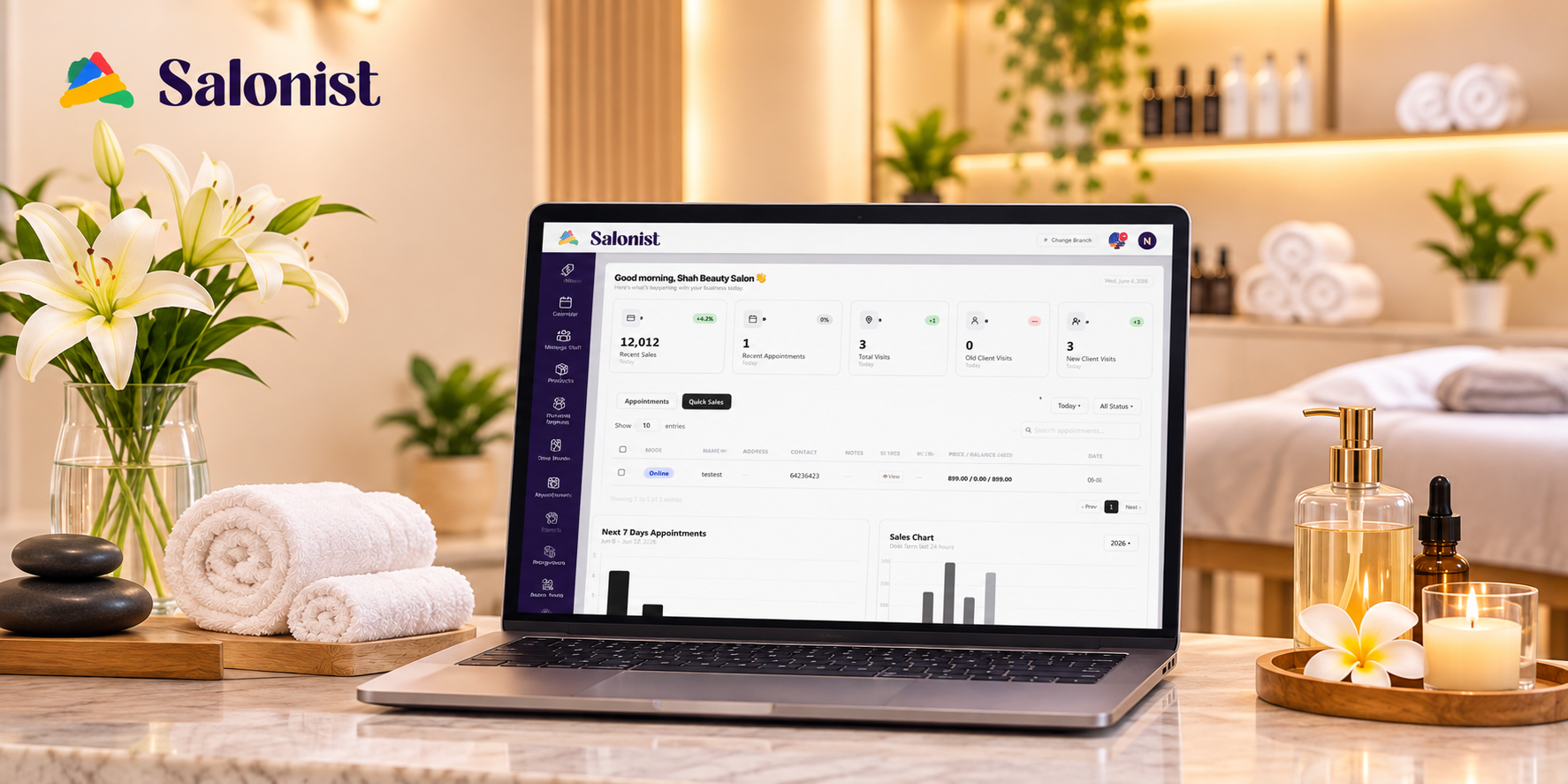
Working solo means handling the front desk yourself. Salonist’s software for booth and suite renters brings those jobs under one roof.
Simplify Online Appointment Booking and Scheduling
Clients book through a link, so they don’t have to wait on your reply, and your calendar updates as they do. See how Salonist online booking works.
Manage Client Profiles and Service History
Keep contact details, visit history, and notes together. Before each appointment, you’ll know who’s walking in and what you did last time.
Send Appointment Reminders to Reduce No-Shows
Reminders can go out automatically instead of you typing each one. Salonist also works with WhatsApp tools such as Interakt and Wati, which helps if that’s how your clients prefer to hear from you.
Organize Payments and Keep Track of Business Revenue
Take payments and see your revenue in the same system. Month-end stops being a hunt through receipts.
Build Stronger Client Relationships and Repeat Business
Client profiles and a rewards program help you stay in touch with regulars and give them a reason to come back.
Is Renting a Salon Suite Profitable?
It depends on you. These four angles should help you decide.
When Renting a Salon Suite Makes Financial Sense
It works when you have steady regulars, can cover costs on a cautious booking estimate, and have a few months of savings behind you.
When a Salon Suite May Not Be the Right Choice
Hold off if you’re early in your career, depend on walk-ins, or have a small client list. It can also be the wrong fit if you do your best work around other people.
Salon Suite Rental vs. Employment: Which Should You Choose?
If you want security, go for employment. If you want control and higher income potential, choose rental. But remember, you’ll pay your own taxes and insurance and won’t get paid vacation days. Don’t compare menu prices; compare net income.
Questions to Ask Yourself Before Renting a Salon Suite
- How many clients will really follow me?
- Can I pay rent in my slowest month?
- Do I want to run a business, or mostly do the craft?
- Who covers my income if I’m sick?
Frequently Asked Questions About Salon Suites
What is a salon suite?
A salon suite is a private studio you rent inside a building with other beauty businesses. You get your own room and your own lock. You set your own prices and hours. The landlord looks after the building and you look after your clients.
How much does it cost to rent a salon suite?
In major US cities, suites typically cost about $400 to $800 a week, or roughly $1,700 to $3,500 a month. Rent varies a lot by city and building, so call a few local buildings for current rates. Then add insurance, products, software, marketing and taxes to your budget.
Is renting a salon suite worth it?
It can be worth it when you have steady regulars. You also need a few months of savings for slow periods. If your client list is still small, wait until it grows.
Is a salon suite more profitable than chair rental?
Not automatically. Suite rent is usually higher, so on the same takings chair rental often leaves you more. A suite pays off when the privacy lets you charge more, see more clients or sell retail.
Can I rent a salon suite part-time?
Some buildings offer shared suites, day rates or month-to-month terms. Standard suites charge full rent however many days you work, so check your break-even on the days you will actually work.
What is the difference between a salon suite and booth rental?
Booth rental usually means an open floor shared with other professionals. A suite is a private room with walls and a lock. A suite costs more but gives you more quiet and control.
How many clients do I need to cover salon suite rent?
Add up your monthly costs. Then divide by what you keep from each service after product costs. If your costs are $2,000 and you keep $50 per service, you need 40 services a month to break even.
Do I need a license to work in a salon suite?
In most places you do. Check that your license is valid for that location. Ask the landlord about insurance needs. Sanitation and fire safety rules also differ from place to place.
What should I check in a salon suite lease?
Check the lease length, security deposit, notice period, rent increases and early termination penalties. Get every promise in writing. Verbal agreements will not help you later.
How can software help me run a salon suite?
Salon software like Salonist lets clients book online at any time. It sends reminders and keeps client history in one place. You can also take payments and track revenue in the same system. You can start a free trial to see how it fits your day.
Conclusion: Should a Salon Suite Be Your Next Step in the Beauty Industry?
A salon suite gives you control over pricing, scheduling, and branding. It also gives you every bill and every empty slot. Neither side cancels out the other, so do the math for your own book before you sign.
Once you’re in, the job changes. You’re still doing hair or nails, but you’re also running a small business. Steady bookings, fewer gaps, loyal clients, and clear records are what keep it going. Salonist can handle the daily side of that, from scheduling to reminders to payments.
Tired of running your suite from your phone’s message inbox? Start your free Salonist trial and see how booking, reminders, and payments fit in one place.