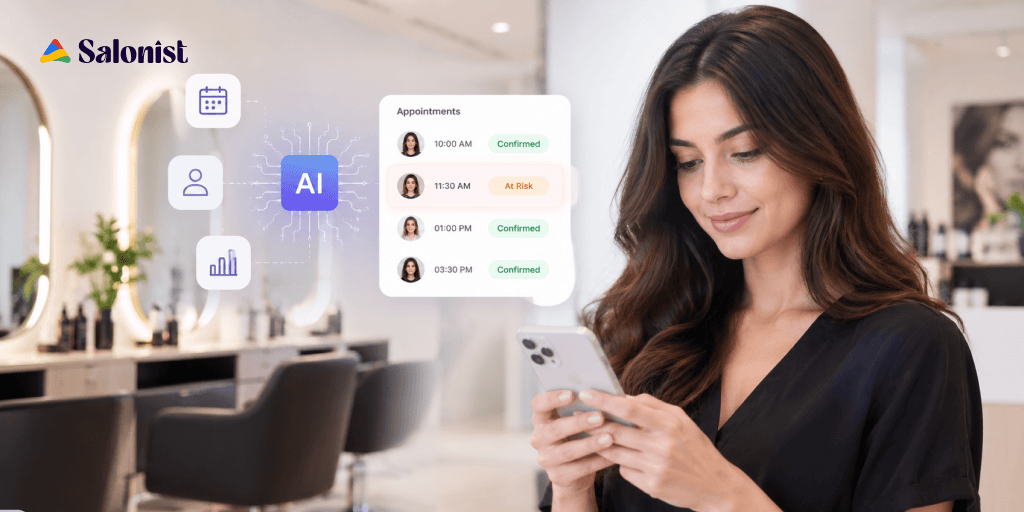
A salon loses actual money when its customers don’t turn up for their scheduled appointment. This is not something that happens once, but rather frequently. Some customers book an appointment, miss it, and then schedule the following month without a problem.
Reminder texts fix forgetfulness. They don't tell you who's at risk of skipping. That's the harder problem, and it's where AI no-show prediction salon tools start to earn their keep.
The following blog will talk about the role of AI in predicting a salon’s day, making routine processes easy for salons, and its accuracy.
Why Salon No-Shows Are More Than Missed Appointments?
An empty chair costs more than one missed service. Staff time, daily output, and every other client who could've filled that slot.
The Real Cost of an Empty Appointment Slot
One no-show doesn't sink a business. Ten of them, spread across a month, start to.
- Lost revenue from the booked service
- A stylist standing idle instead of working
- Lower output for the whole day, since one gap throws off the flow
- A missed chance to serve a walk-in or waitlisted client instead
Run the numbers across a busy week, and it gets uncomfortable fast. No-show rates vary by market. Some salons see close to 10%. Others closer to 30%.
Why Traditional Appointment Reminders Aren't Always Enough?
SMS and email reminders help. Every salon should use them. But here's the flaw. They treat every booking the same.
A reminder to someone who never misses an appointment does nothing extra. It's noise they already expected. A reminder to someone who's skipped the last two bookings and never confirmed? Probably not enough either. That's the actual gap. Standard reminders remind. They don't rank risk. They don't tell your front desk which bookings this week need a phone call instead of a text.
Can AI Really Predict Salon No-Shows?
Prediction might seem like something out of science fiction. But it’s not. It is more like finding patterns than predicting the future.
How AI No-Show Prediction Works?
AI no-show prediction looks at past booking data and finds patterns a person would take forever to spot by hand. Which clients cancel late. Which time slots get skipped most. Which mix of service, lead time, and booking channel tends to end in an empty chair.
The output isn't a promise. It's a risk score. A chance, not a certainty. Less "this person will not show up." More "this booking is riskier than usual." That distinction matters more than it sounds like it should.
What Data Does AI Use?
Prediction is only as good as the historical data from which it comes. The important signals will include:
- Prior no-shows and cancelations at the last minute
- Cancellations overall, not just no-shows
- How often the client books
- Time of day and day of week
- Lead time between booking and the appointment
- Type of service booked
- Whether the client responded to past reminders
- General booking behavior, like same-day versus planned-ahead bookings
None of this is exceptional. It's the same information most salon client management software collects. The real difference is whether anyone actually uses it to signal danger before the appointment, not afterward.
How Good Are AI No-Show Predictions?
No model gets this perfectly right. Any vendor who says otherwise is selling something.
Accuracy comes down to the volume and quality of data behind it. A salon with years of clean records gets sharper predictions than one that switched software last month. Salon-specific data also beats generic data from other industries. A hair salon will never act in the same manner as a dental clinic, even though the spreadsheet is similar.
How AI Can Help Prevent Salon No-Shows?
Prediction by itself doesn't fill a single chair. It only earns its keep once it triggers something. An action. A message. A phone call.
Send Targeted Appointment Reminders
A salon can send extra touches to bookings flagged as higher risk. Maybe an earlier reminder. Maybe a different channel, like a call instead of a text. Or just a message that asks for confirmation instead of stating the time.
Make Confirmation and Rescheduling Simple
- One-tap confirmation instead of a reply-required text
- Cancellation that takes seconds, not a phone call during business hours
- Rescheduling that doesn't need the front desk at all
Friction is often the real reason someone no-shows instead of canceling properly. If changing an appointment means waiting on hold or texting back and forth, plenty of clients just won't bother. They'll skip it instead. Online booking that lets clients change their own appointment removes most of that friction.
Give Salons Time to Refill Empty Slots
That is where the real cash is. Staff will have time to respond before the window closes once a booking is flagged as an at-risk booking.
- Alert the front desk early enough to make a call
- Reach out to a waitlisted client who wanted that time
- Offer the slot to someone else before it goes to waste
A slot recovered this way isn't a consolation prize. It's the difference between a scheduled loss and a booking that still pays for the stylist's hour.
What the Data Says About Salon No-Shows?
Research on missed appointments goes well beyond salons, but the patterns hold up across service industries.
What Research Tells Us About Missed Appointments?
Research specific to salon no-shows is quite limited, particularly when compared to the healthcare sector. Medical and dental offices keep close watch on this metric since their business model relies on it, and no-show rates range from 15% to over 30%.
Salon industry surveys and vendor data point to something similar, usually 10% to 30% depending on the market. Take any single number here with a grain of salt. Salon data isn't tracked as rigorously as healthcare data, and many of the same figures repeat across different sites. Here's the honest version. No-shows are common enough to matter, and the exact figure depends on your region and service mix.
Customer Behavior Can Reveal No-Show Patterns
Look at booking history over a few months, and the patterns tend to surface on their own. A client who's canceled the last three appointments last minute isn't the same risk as a five-year regular who's never missed one. That difference is what turns booking data into something a model can use.
Why More Data Doesn't Always Mean Better Predictions?
More records help, but only if they're accurate. Duplicate client profiles, missing outcomes, messy cancellation logs. Any of these confuse a model faster than a small, clean dataset ever would.
Appointment history is still client data. Handle it the way you'd handle payment details. Securely. Only for purposes a client would expect.
AI and Salonist: The Better Appointment Management System for Your Salon
Prediction is only valuable if it is incorporated into a working system, one that takes care of basic functions like scheduling and reminders. Skip that part, and a risk score is just a number nobody acts on.
How Salonist Supports Better Appointment Management?
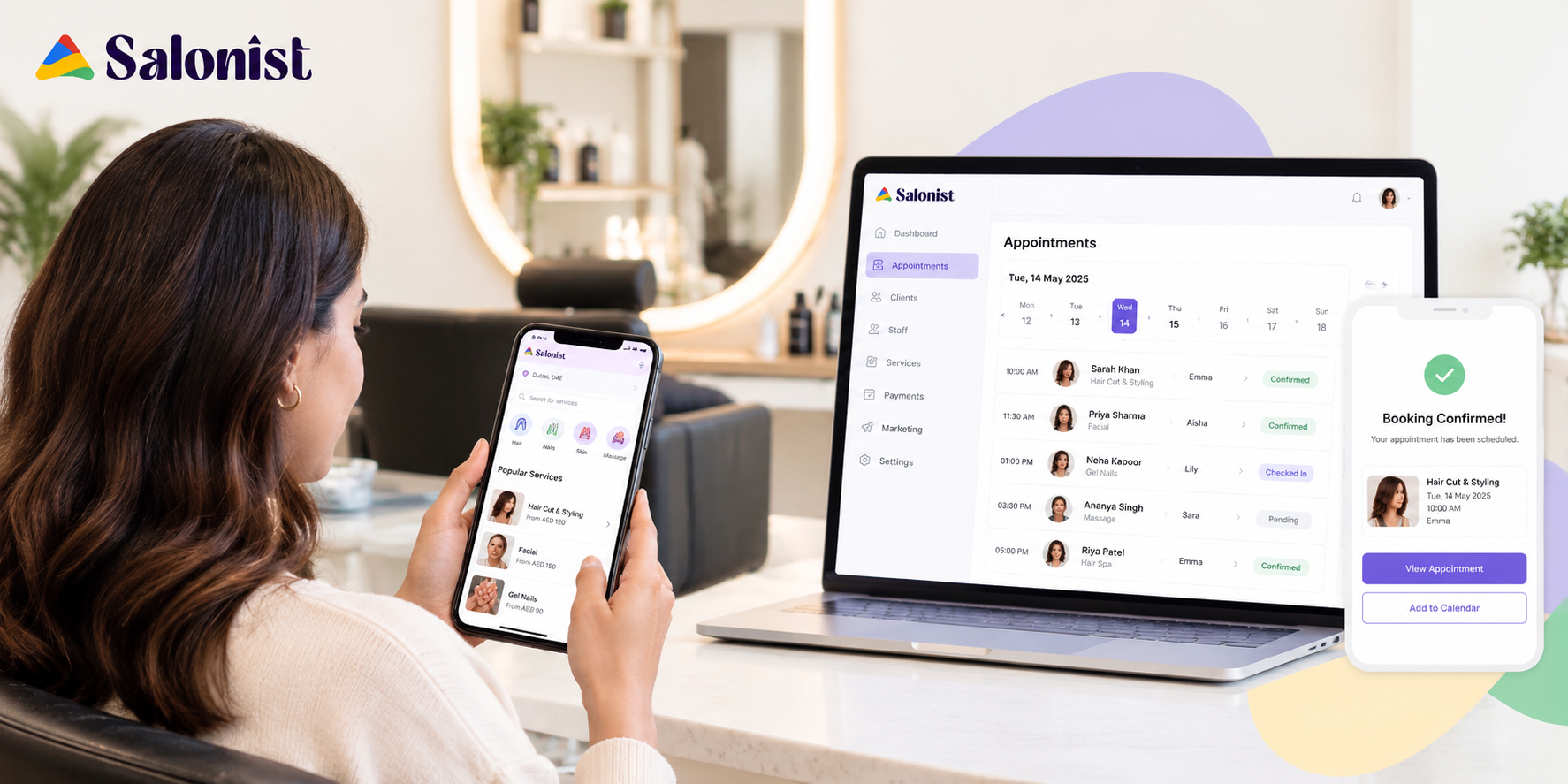
Salonist takes care of all that already. Schedule appointments, keep track of customer data and booking history, automate reminders and alerts, and process cancellations and rebooking. And it’s all in one place rather than in different apps like calendar, spreadsheet, and group chat.
Reducing no-shows now might be more important than waiting for something that does not even exist yet. This related read on cutting no-shows through smarter staff scheduling is worth acting on right now.
Where AI Could Strengthen the Salonist Experience?
Booking history, reminder logs, cancellation records. That's the raw material a predictive model needs. Applied well, AI no-show prediction could support risk scoring for individual bookings. It could also drive sharper reminders, smarter waitlist matching, and actions triggered by risk level instead of a fixed schedule.
Worth being direct about this. That describes where the industry is heading, not a claim about a feature that exists today. Salonist's strength today is the base under all of that. Clean data, organized workflows, a proper client record system. Nothing works on top of a mess, prediction included.
AI No-Show Prediction vs. Traditional Salon Reminders
Reminders and prediction aren't rivals. They handle two different parts of the same problem.
| Traditional Reminders | AI-Powered Prediction |
|---|---|
| Reminds most or all clients | Prioritizes higher-risk appointments |
| Same reminder approach for everyone | Behavior-based intervention |
| Reactive | Predictive |
| Limited use of appointment history | Uses historical patterns |
| Staff follows up manually | Can trigger automated workflows |
Do Salons Still Need Traditional Reminders?
Yes. Not even close to a debate. AI prediction tells you who might need extra attention. Reminders and easy rescheduling are still the mechanism that stops a no-show from happening. One without the other is half a system.
What Should the Salon Look for in an AI No-Show Solution?
Everything labeled "AI-powered" is not really AI. Some of it is just a fancy spreadsheet. There are a few things that make the difference between a good solution and a dashboard no one ever uses again.
Predictive Analytics
Clear risk signals and readable reports beat a complicated dashboard nobody has time to check between clients.
Automated Customer Communication
- SMS
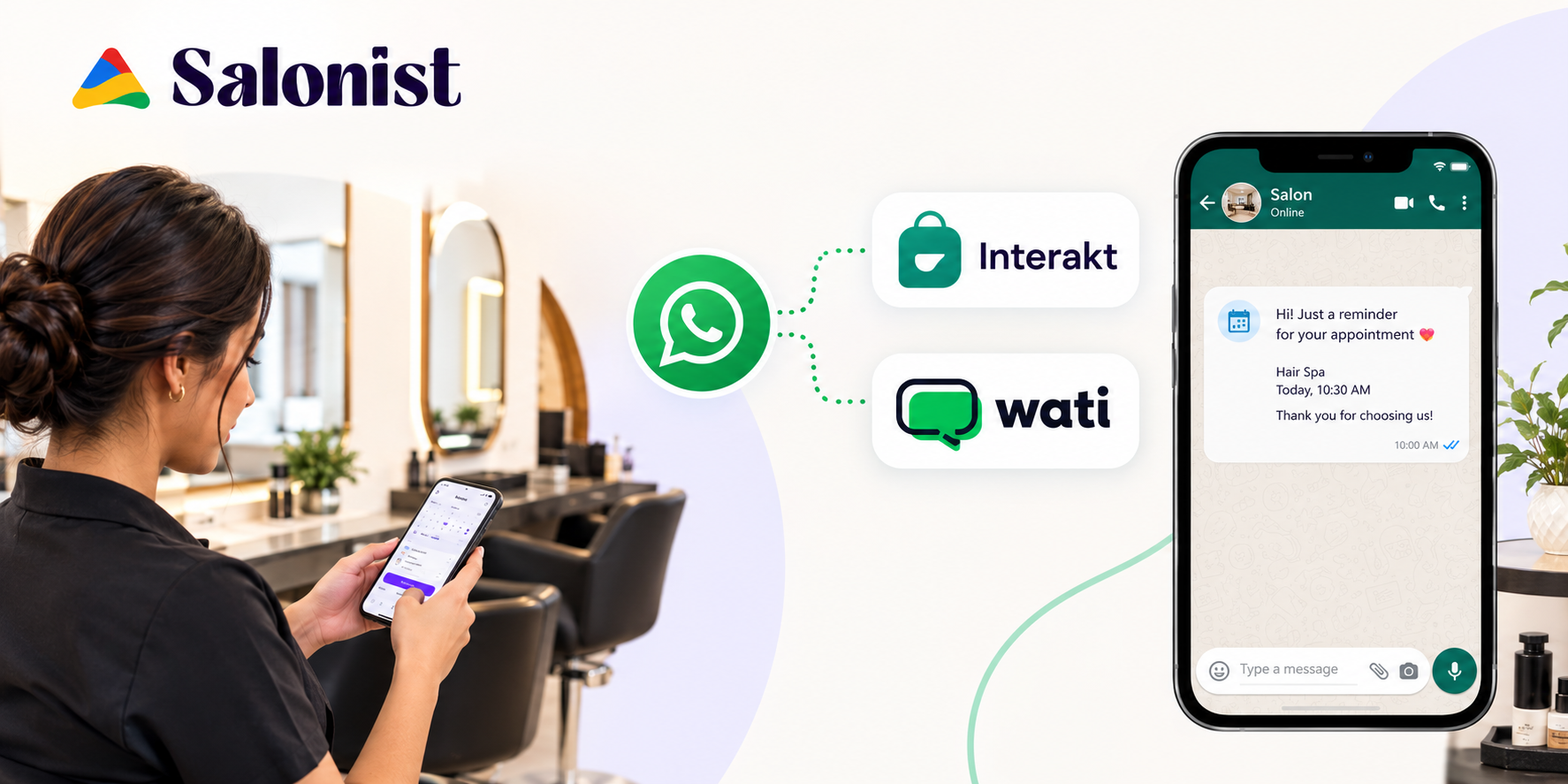
- Notifications sent at the right time, through whichever channel the client checks
Easy Rescheduling
Clients should be able to change an appointment without calling the salon during business hours. If they have to call, you've already lost some of them.
Waitlist and Slot Recovery
A cancellation should trigger an automatic offer to the next person in line, not a scramble minutes before the slot opens up.
ROI and Performance Tracking
The tool should show its own results in plain numbers. No-show rate, cancellation rate, recovered appointments, revenue recovered, staff utilization. If it can't show whether it's working, that's the whole review right there.
The Future of Salon Appointment Management Is Predictive
While the technology is lagging, the direction is obvious. Appointment scheduling is changing from being reactive to proactive.
From Appointment Management to Prediction of Customer Behavior
Most salon software today reacts to what already happened. A cancellation gets logged. A no-show gets recorded. Staff deal with the empty slot after the fact. Predictive tools flip that order. They flag risk while there's still time to act. That's a different job than just keeping a calendar current. For more on where this is already happening, see how salon owners are using AI right now.
AI Won't Eliminate Every No-Show
Some clients will always cancel at the last minute, no matter what the data predicted. A flat tire. A sick kid. A forgotten commitment nobody could've flagged in advance. No model catches everything, and it's worth being honest about that instead of overselling it. The realistic goal isn't zero no-shows. It's fewer avoidable ones, plus enough warning to do something about the rest. Human judgment still carries more weight than any score a system generates.
Conclusion: Can AI Really Prevent Salon No-Shows?
AI can help a salon spot which appointments are at risk and act before the slot goes empty. It cannot guarantee that a client walks through the door. Those are two different jobs, and confusing them is how expectations get set wrong from the start.
What the data keeps showing, over and over, is that booking history holds real signal. Who cancels, when, and how often. That signal only becomes valuable once it connects to something actionable. A smarter reminder. An easier way to reschedule. A waitlist that fills the gap automatically. Do that well, and the business impact is straightforward. Fewer empty chairs. Better use of staff hours. A schedule you can plan around instead of one that ambushes you every afternoon.
Salonist and platforms like it are part of that shift. Software used to just track appointments. Now it can help a salon act on what it already knows.
If your booking data can tell you which clients are at risk, why wait until they don't show up to find out?
Ready to swap guesswork for a process your team can manage? Explore how Salonist handles appointment management.
Frequently Asked Questions
Can AI predict salon no-shows?
AI can flag which bookings carry a higher risk of a no-show. It studies past booking data to find patterns. It gives a risk score for each booking. It cannot promise that a client will or will not show up.
What data does AI use to predict salon no-shows?
AI looks at past no-shows and late cancellations. It also checks how often a client books and the lead time before the visit. The service type and time slot matter too. Replies to past reminders add another useful signal.
How accurate is AI no-show prediction for salons?
No model is perfect. Accuracy depends on how much clean booking data a salon has. A salon with years of accurate records gets better results. Salon data also works better than data from other industries.
Do salons still need appointment reminders if they use AI?
Yes. AI only tells you which clients may need extra attention. Reminders and easy rescheduling are what stop the no-show. A salon needs both to get real results.
What is a typical no-show rate for salons?
Most salon surveys and vendor data point to a range of 10% to 30%. The exact rate depends on your market and service mix. Salon data is not tracked as closely as healthcare data. So treat any single number with care.
How can a salon refill a slot after a cancellation?
Keep a waitlist of clients who want an earlier time. Alert the front desk as soon as a booking looks risky. Then offer the open slot to the next client in line. Early warning gives staff time to act.
What should a salon look for in an AI no-show tool?
Look for clear risk signals and simple reports. The tool should send reminders by SMS and WhatsApp and email. Clients should be able to reschedule without calling. It should also track no-show rates and recovered revenue.