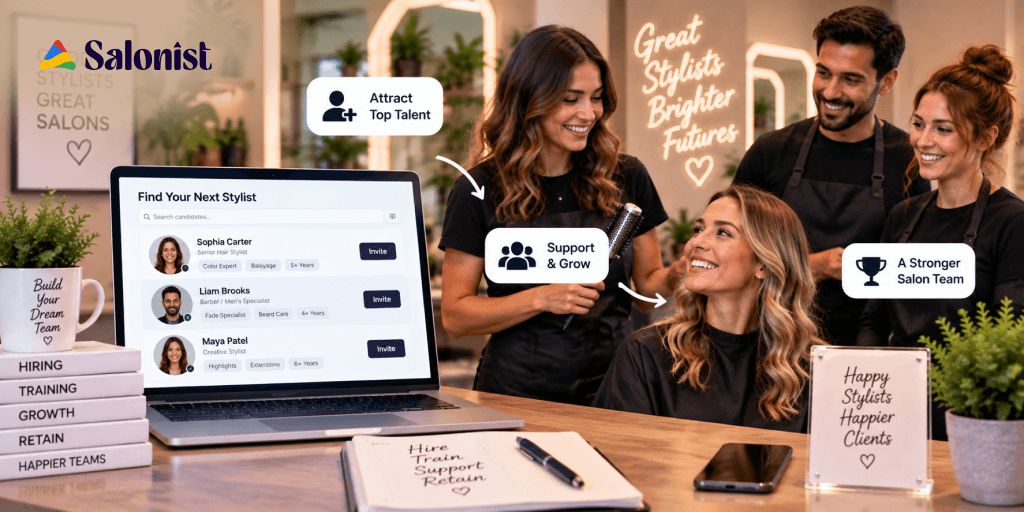
A stylist job posting can sit open for weeks with barely a response. Then the stylist who quietly built your entire Saturday afternoon books gives two weeks' notice, and three of her regulars start asking where she's headed next. That's the situation a lot of salon owners are dealing with right now, and it has less to do with how nice the salon looks and more to do with something harder to fix: there simply aren't enough skilled stylists to go around, and the ones who exist know it.
So the real question isn't only how to hire salon staff. It's how to build a place good stylists actually want to stay. The hard part is not getting a person in the door but making sure they stay.
In this article, we discuss why hiring has become difficult, what a proper hiring process is, what stylists want from their jobs, and how to retain your top employees.
Why Is Hiring Good Staff for a Salon Such a Difficult Task These Days?
The first step to addressing the issue is determining how things have changed.
Skilled Stylists Have More Career Options
A talented stylist today isn't just weighing your salon against the one down the street. They're also considering booth rental, freelance work, mobile services, or simply building a following and taking bookings straight from Instagram. Each option comes with its own trade-offs around income, freedom, and hassle.
A job listing with a duty list and a pay range doesn't cut it anymore. Stylists are treating this like any other career decision. If your posting sounds like every other one out there, a good candidate has no real reason to pick your chair over the next salon's.
Clients Follow Great Stylists
A stylist's reputation is tied to your revenue, whether you built that reputation or they did. When someone experienced walks out the door, they often take a good chunk of their booked calendar with them. Losing the chair is one problem. Losing months of client trust that now follows someone else is a much bigger one, and it means hiring can't be treated as a task you simply check off.
Hiring for Skills Alone Isn't Enough
Technical skill gets someone the interview. It's rarely the reason they last a year. How someone communicates, whether they show up on time, and how they handle a frustrated client end up mattering just as much as their portfolio. An excellent colorist who is consistently late will end up costing you more in cancellations than an average stylist who is dependable and pleasant to work with.
How to Hire Salon Staff That Will Be a Good Fit

Effective recruiting begins much earlier than putting out the "help wanted" ad. It's all about knowing what the job requires and conducting proper evaluations.
Defining the Job Before Recruiting
Vague roles pull in vague applicants. Even before you start writing the position description, be clear about the skills required, the experience level, working hours, service to the clients, and compensation package for the candidate. Overlook this important step, and you would be wasting your time for weeks trying to interview people who were not right for the job at all.
Job Descriptions to Get the Right Stylists
Once you have figured out what is needed for the position, write the ad according to these criteria. Mention daily responsibilities and stress training, company culture, and pay potential instead of the generic "experienced stylist required." Specifics get attention. Mentioning your average client tenure, your booking setup, or how commission actually works tells a candidate you run a tight operation, and that alone puts you ahead of most listings they'll see that week.
Recruit Where Salon Professionals Actually Look
Job boards aren't the only channel, and often not the best one. Social media, beauty industry forums, referrals from your current team, beauty schools, and local industry events all tend to surface stronger candidates. Referrals require special consideration more than many hair salons take into account. Stylists know other stylists, and referrals from within your salon staff have more credibility than a stranger's resume.
Evaluate More Than a Resume
A resume tells you where someone has worked. It does not provide any insights into how they work. Request a portfolio, conduct a skills test, and subject the applicants to a real customer scenario to find out how they perform under a certain amount of pressure. Listen to how they speak of their previous colleagues and supervisors. It usually says more about fit than any technical question will.
What Great Stylists Actually Want From a Workplace
Hiring well only gets you halfway there. What happens after someone joins decides whether the recruiting effort was worth it.
Respect for Their Time and Schedule
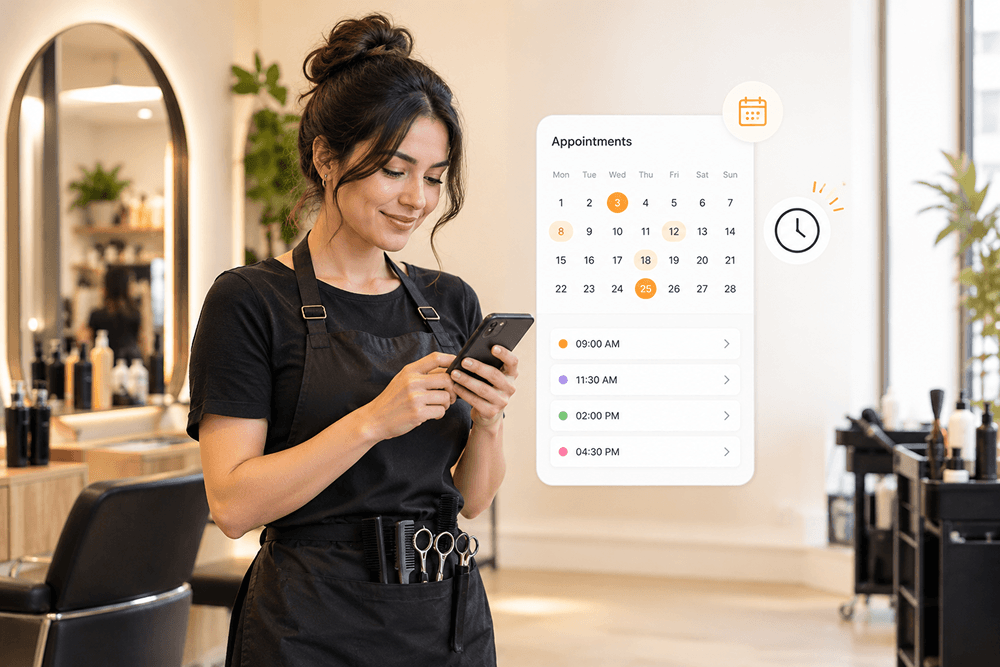
Stylists build their income around a predictable book of appointments. Constant last-minute changes and scheduling gaps hit their paycheck directly, and it wears down trust fast. A salon that runs its calendar well is, in a very practical sense, protecting its staff's earnings.
Opportunities to Earn and Grow
Pay matters, but so does the path to earning more of it. Performance incentives, commission on upsells, access to training, and a real route to advancement all tell a stylist their growth isn't capped the day they walk in.
A Positive Salon Environment
Supportive managers, a team that actually gets along, recognition for good work, and a floor that isn't running on constant stress. These are the things stylists point to when explaining why they stayed somewhere for years instead of months. Culture rarely decides a job interview, but it almost always decides a resignation.
Tools for Giving Your Clients an Improved Experience
A stylist's time is best spent with their clients, not struggling with a poor booking system. Simple appointment management, easy digital communication, and less time lost to admin work free a stylist up to do the job they actually signed up for. Technology is supposed to help in the process, not hinder it.
How to Retain Your Best Salon Stylists
Retaining your staff is not a magic bullet. It's many small practices that make it much more attractive for them to stick around than to leave.
Create an Environment Where Stylists Don't Want to Leave
Recognition, honest communication, respectful leadership, and a team that actually collaborates create the kind of workplace stylists talk about to other stylists, which quietly helps your hiring too. You don't build that in one team meeting. It's built in how disagreements get handled and how good work gets noticed, week after week.
Give Stylists a Clear Career Path
A stylist who can picture the route from junior to senior to specialist to trainer or manager has a real reason to stick around. Without that, even your best people start wondering what's out there. Career training and development make the job a career.
Reduce Stress Through Scheduling
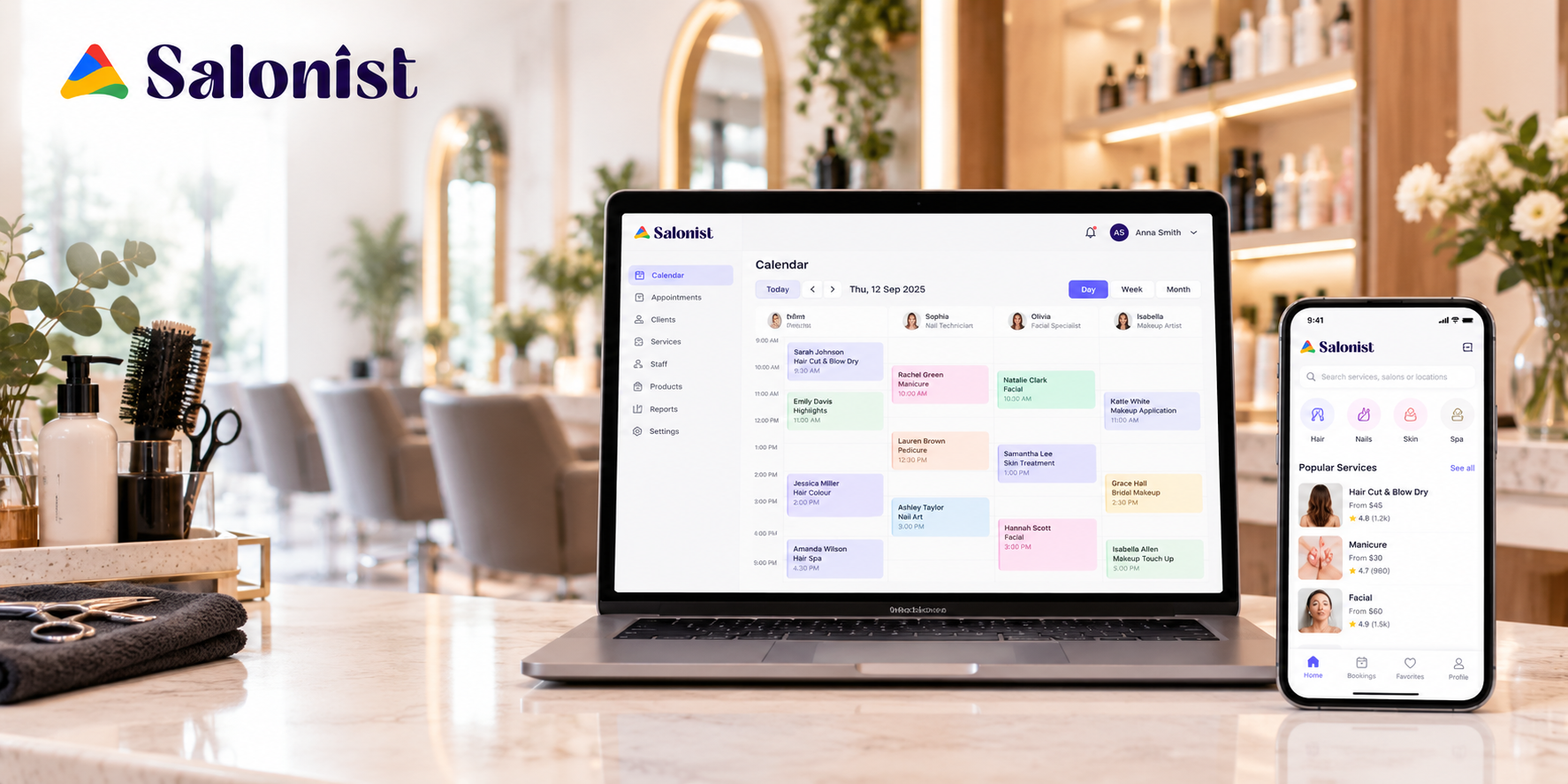
Provide staff members with the choice of being able to view their own schedule and prevent any scheduling difficulties. Staff management software like Salonist will do the trick for you due to fewer possibilities of double-booking and no manual labor involved.
Reward Performance Instead of Experience
Bonuses, commission, and recognition tied to actual client satisfaction reward the people driving results, not just the ones who've stuck around longest. Both loyalty and performance are worth acknowledging, but making them equal can actually discourage your best employees.
Use Technology to Make Your Salon a Better Place to Work
A lot of what stylists want, predictable schedules, less admin, more time with clients, comes down to how well the salon runs day to day.
Appointment Booking Made Easier
Manually booked appointments are very frustrating and often lead to mistakes. Using an app that enables the stylist to schedule appointments for the future will save them from the daily hassle.
Keep Your Clients Always Informed
Use SMS, WhatsApp notifications, and automated appointment reminders to make sure clients show up on time. More full days for stylists result in stable income for them.
Decrease Front Desk Pressure
An automatic booking process, online check-ins, and client messages keep your employees from being busy with the telephone that doesn't stop ringing, and free them to work with the current client.
Use Data to Improve Staff and Salon Performance
Recording the number of appointments, times of the day when people come in for appointments, stylists' productivity levels, customer reviews, and no-shows provides solid data for planning rather than guesswork. Salon reporting and analytics collect all the information in one place instead of keeping it scattered between Excel spreadsheets and Post-it notes. Salonist's article on how AI technology is being used by salon owners makes the same point: the time saved goes straight back into serving customers.
Common Mistakes Salons Make When Hiring Staff
A few mistakes keep showing up across salons of every size.
- Rushing to hire rather than hiring correctly is going to be much more expensive in turnover than simply leaving that seat open a little bit longer.
- When you concentrate only on technical ability, you're ignoring such aspects as communication and dependability, both of which are just as important.
- Making promises about growth but with no plan whatsoever is just going to create cynicism.
- Not considering work-life balance will wear out your talented stylists quicker than nearly anything else.
How to Create a Salon Staff That Will Stay Around
What makes employees want to stick around is actually a very simple process of doing the same few things all the time:
- Hiring the right candidates not only based on talent but also compatibility
- Setting clear expectations at the very beginning
- Listening to people before you even need to give them an exit interview
- Creating a workplace that your staff will be proud of and happy to recommend to other stylists
It is all about consistency.
Final Takeaway: Great Stylists Are Worth Retaining
Hiring and retention aren't really two separate problems. They're one strategy. A salon that hires well but manages poorly keeps losing the people it worked hard to find. A salon that is a master at retention but poor at hiring will simply continue to hire the wrong people.
Money is important, but it is rarely the sole reason for staying or leaving. Reliable scheduling, being appreciated, seeing a future in terms of career advancement, and having a work environment where you are not bogged down in paperwork are equally important.
Is your salon doing enough to attract and keep its best people? Take a look at how smarter scheduling and client communication with Salonist can make the workday better for your team and the experience better for your clients.
FAQs
Why is it so hard to hire salon stylists right now?
Skilled stylists have more ways to earn than they used to. Booth rental, freelance work, mobile services, and building a client base directly through social media all compete with a salaried chair. A generic job listing gives a strong candidate no reason to choose your salon over those options, so the shortage feels worse than the raw numbers suggest.
What should a salon stylist job description include?
The specifics a candidate cannot get anywhere else: daily responsibilities, how commission actually works, training available, shift patterns, and what advancement looks like. Details about how the salon runs, such as your booking setup or average client tenure, signal a well-managed operation and separate your ad from the rest.
How do I stop stylists from taking clients when they leave?
You cannot fully prevent it, since clients build loyalty to people. What you can do is make sure client history, preferences, and contact details live in the salon's system rather than in one stylist's phone, and spread new client bookings across the team so no single chair holds all the relationships.
What makes stylists stay at a salon long term?
A predictable schedule that protects their income, recognition for good work, a visible path from junior to senior or specialist, and a floor that isn't run on constant stress. Pay matters, but stylists rarely leave a good workplace for a marginally better rate elsewhere.
How does scheduling affect stylist retention?
Directly. Stylists earn from booked hours, so gaps, double bookings, and last-minute changes hit their paycheck. A calendar that reflects real availability and spreads bookings evenly protects earnings, which is one of the most practical retention levers an owner controls.
Where should salons advertise stylist jobs?
Referrals from your current team usually produce the strongest candidates, followed by beauty schools, industry forums, local events, and social media. Job boards work, but they tend to surface the widest and least filtered pool, so treat them as one channel rather than the whole strategy.