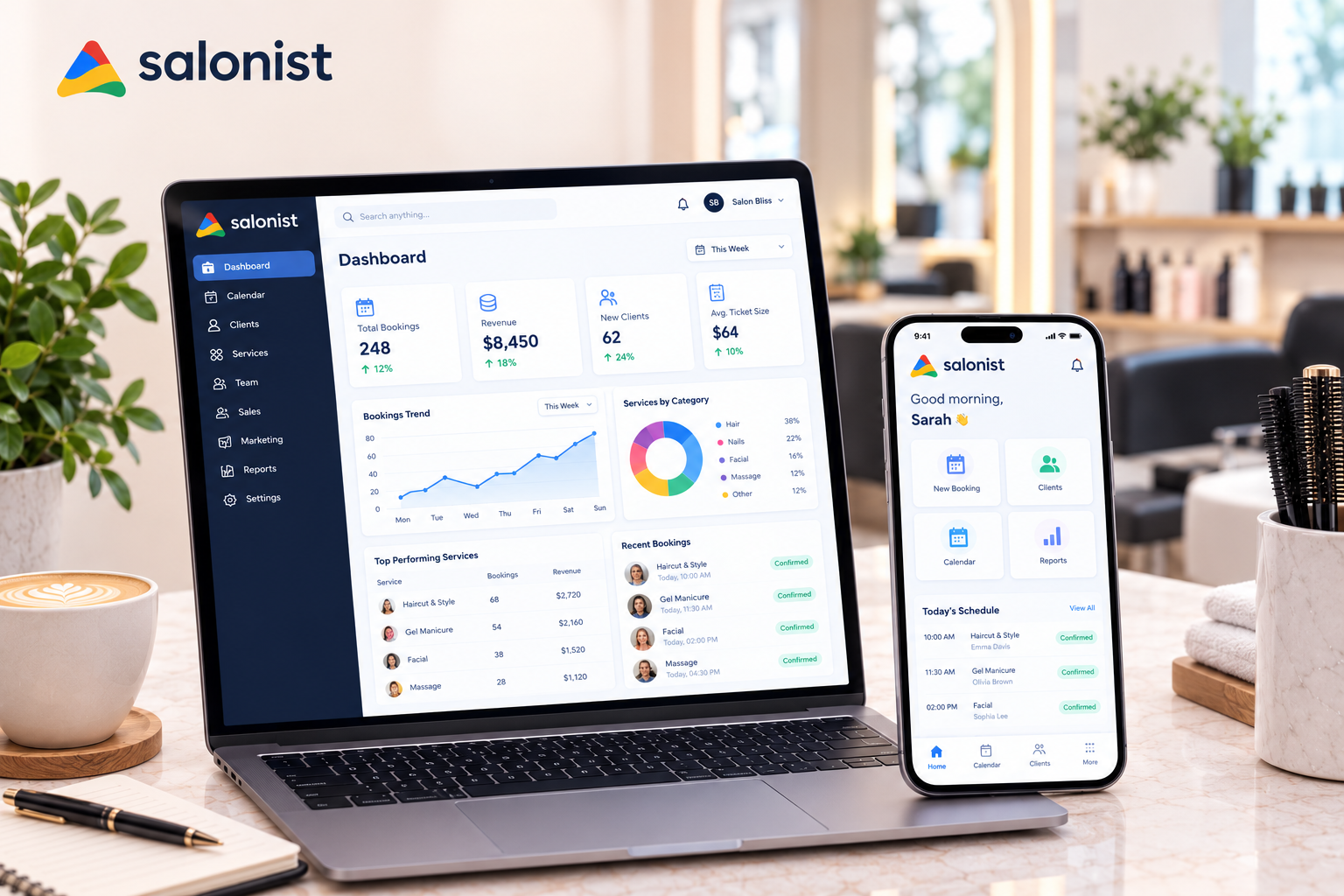
Your salon may feel busy every single day. But busy does not always mean profitable. Salon KPIs show you what is really going on behind the front desk. They turn bookings and sales into clear numbers you can act on.
This guide covers the key numbers every salon owner should check once a week. You will learn what each KPI means and how to work it out. You will also get healthy target ranges and a simple weekly review routine.
What Are Salon KPIs?
KPI stands for key performance indicator. It is a number that tells you if one part of your business is healthy. A salon KPI might measure sales or client loyalty or staff output.
Good KPIs share three traits:
- They are easy to measure from your booking and sales data.
- They link to a clear business goal.
- They show a trend when you compare one week to the next.
You do not need dozens of numbers. Ten well chosen salon metrics give you a full picture. Anything more tends to create noise and slow you down.
Why Track Salon KPIs Every Week?
Monthly reports often come too late to fix small problems. A dip in rebooking can cost you weeks of revenue before you spot it. A weekly check catches issues while they are still cheap to fix.
Weekly tracking also helps your team. Staff can see their progress and adjust quickly. Small wins each week build a habit of steady growth.
Here is what a weekly rhythm gives you:
- Early warning when bookings or sales start to slow
- Faster feedback on promotions and price changes
- Clear goals for each stylist and therapist
- Better staffing decisions for the week ahead
10 Salon KPIs to Check Every Week
The list below covers money and clients and team output. Together these numbers show how healthy your salon really is.
1. Total Weekly Revenue
This is the total money your salon earned from services and retail in one week. It is the first number most owners look at. Still it only tells you part of the story.
Split revenue into service sales and retail sales. Then compare each figure to the same week last month. Look for steady growth rather than one big spike.
2. Average Ticket Value
Average ticket value shows how much each client spends per visit.
Formula: Total revenue divided by the number of client visits.
A rising average ticket means clients are adding services or products. A falling one may point to heavy discounts. Train your team to suggest treatments and add ons that truly suit each client.
3. Staff Utilization Rate
Utilization shows how much of your team's available time is booked.
Formula: Booked hours divided by available hours. Multiply the result by 100.
Most salons aim for 75 to 85 percent. Below 60 percent means empty chairs and wasted payroll. Above 90 percent can lead to burnout and rushed service.
Check this number for each staff member. It helps you plan shifts and spot who needs more bookings.
4. Client Retention Rate
Retention shows how many clients come back within a set period. It is one of the strongest signs of a healthy salon. Keeping a client costs far less than finding a new one.
Formula: Returning clients divided by total clients from the earlier period. Multiply the result by 100.
Track first time client retention on its own. Many salons find that fewer than half of new clients return for a second visit. Memberships and prepaid packages can lift this number. Here is how to sell salon memberships online without cutting your prices.
5. Rebooking Rate
Rebooking rate shows how many clients book their next visit before they leave.
Formula: Clients who rebooked at checkout divided by total clients served. Multiply the result by 100.
A strong rebooking rate fills your calendar weeks ahead. Many top salons aim for 60 percent or higher. Ask every stylist to suggest the next date while the client is still in the chair.
6. New Client Count
This KPI counts first time clients each week. It tells you if your marketing brings fresh faces through the door.
Also note where each new client came from. Common sources include:
- Google search and online booking
- Social media posts and ads
- Referrals from current clients
- Walk ins from the street
Put more budget into the sources that bring clients who return. Cut spending on channels that only bring one time bargain hunters.
7. No Show and Late Cancellation Rate
Every missed booking is an empty slot you cannot resell. Over a year these gaps add up to serious lost income.
Formula: No shows plus late cancellations divided by total bookings. Multiply the result by 100.
Try to keep this rate below 5 percent. Automated reminders and booking deposits help cut missed visits. You can also see how AI can predict salon no shows before they happen.
8. Retail Sales per Client
Retail is often the easiest way to grow revenue without new clients.
Formula: Total retail sales divided by the number of clients served.
Also compare retail sales to service sales. Many salons target retail at 15 to 20 percent of service revenue. This guide on salon retail upsells shows practical ways to raise it.
9. Revenue per Staff Hour
This KPI shows how much each team member earns for the salon per hour worked.
Formula: Revenue from one staff member divided by their hours worked.
It is fairer than raw sales because it accounts for part time staff. Use it in coaching sessions and to set commission goals. Salonist employee management shows each person's hours and sales in one place.
10. Online Booking Share
This number shows what share of your bookings came in online.
Formula: Online bookings divided by total bookings. Multiply the result by 100.
Many clients book late at night when your front desk is closed. A higher online share means fewer phone calls and fewer missed chances. Online booking lets clients pick a slot any time from your website or app.
Salon KPI Cheat Sheet
Use this table as a quick weekly reference. Targets vary by market and salon type. Treat them as a starting point and set your own goals over time.
| KPI | How to Work It Out | Healthy Target |
|---|---|---|
| Total weekly revenue | Service sales plus retail sales | Steady growth over time |
| Average ticket value | Revenue ÷ client visits | Rising trend |
| Staff utilization | Booked hours ÷ available hours × 100 | 75% to 85% |
| Client retention | Returning clients ÷ earlier clients × 100 | Rising trend |
| Rebooking rate | Rebooked clients ÷ clients served × 100 | 60% or higher |
| New clients | Count of first time clients | Steady or rising |
| No show rate | Missed visits ÷ total bookings × 100 | Below 5% |
| Retail per client | Retail sales ÷ clients served | 15% to 20% of service sales |
| Revenue per staff hour | Staff revenue ÷ hours worked | Above team average |
| Online booking share | Online bookings ÷ total bookings × 100 | Rising trend |
How to Run a Weekly KPI Review?
Pick the same day and time each week. Monday morning works well for most salons. Keep the whole review to about 20 minutes.
- Pull last week's numbers from your salon software.
- Compare them to the week before and the same week last month.
- Flag any KPI that moved up or down by more than 10 percent.
- Pick one or two areas to fix this week.
- Share those goals with your team at the morning huddle.
- Check the results at your next review.
Do not try to fix everything at once. One clear focus each week beats ten vague goals.
Weekly vs Monthly Salon Metrics
Not every number needs a weekly check. Some move fast and need close attention. Others change slowly and make more sense once a month.
Check weekly:
- Revenue and average ticket value
- Staff utilization and revenue per staff hour
- Rebooking rate and new client count
- No show rate and online booking share
Check monthly:
- Net profit and profit margin
- Payroll as a share of revenue
- Product and back bar costs
- Long term client retention
This split keeps your weekly review short. It also stops you from reacting to normal ups and downs in slower numbers.
How to Set KPI Goals Your Team Can Hit?
Numbers only help when your team knows what to aim for. Start with your current average for each KPI. Then set a small lift for the next four weeks.
Keep goals simple and personal:
- Give each stylist a rebooking target based on their own history.
- Set a retail goal per client rather than a total sales goal.
- Reward progress as well as big wins.
- Post team results where everyone can see them.
Talk about the numbers in a positive way. Staff should see KPIs as a tool for growth and not as a way to blame them.
Common KPI Tracking Mistakes
Even good salons slip up with their numbers. Watch out for these common errors:
- Tracking too many numbers. Pick ten and stick with them.
- Looking at revenue alone. High sales can hide weak profit.
- Ignoring staff level data. Salon averages can hide one struggling team member.
- Relying on manual spreadsheets. Hand entered data is slow and full of errors.
- Keeping results private. Your team cannot improve numbers they never see.
Track Salon KPIs Automatically with Salonist
Manual tracking can eat hours every week. Salonist pulls your salon KPIs straight from bookings and sales. Its salon analytics give you clear reports without any spreadsheets.
Here is what you can see in one place:
- Daily and weekly sales for services and retail
- Staff performance and commission reports
- Client visit history and retention trends
- Appointment and no show reports
- Branch level reports for salons with more than one location
Want to see your salon numbers in one simple dashboard? Try Salonist with your own bookings and team.
Frequently Asked Questions
What are the most important salon KPIs?
The most important salon KPIs are weekly revenue and average ticket value. Rebooking rate and client retention also matter a lot. Staff utilization and no show rate complete the core list.
How often should salon owners review KPIs?
Weekly is best for most salons. It catches problems early without adding much work. Review bigger trends like profit and payroll once a month.
What is a good rebooking rate for a salon?
Many successful salons aim for 60 percent or higher. Salons with regular color clients often reach even more. Train staff to book the next visit at checkout.
What is a good staff utilization rate for a salon?
A rate between 75 and 85 percent is healthy for most salons. It keeps chairs full while leaving room for walk ins and breaks.
How do I calculate average ticket value?
Divide your total revenue by the number of client visits in the same period. Include both service and retail sales for the full picture.
Can salon software track KPIs automatically?
Yes. Salon software like Salonist pulls KPIs from your bookings and sales. You get ready made reports without manual data entry.