Running a salon looks simple from the client's chair: book a slot, enjoy the service, pay and leave. Behind the front desk, it is a different story. Owners and managers juggle bookings, staff rotas, stock, payments, marketing and the occasional difficult client, often all before lunch.
The good news is that most salon management challenges are not unique to your business. They show up in small single-chair studios and busy multi-branch salons alike, and they usually have practical fixes. In this guide we walk through the ten problems salon owners mention most often, explain why each one happens, and share clear steps you can take to solve it.
Why Salon Management Challenges Pile Up So Quickly
A salon is a service business with fixed capacity. Every stylist has a limited number of hours, every chair can only be used once at a time, and an empty slot can never be sold again. That means small inefficiencies add up fast. A double booking, a missing product or a staff member who is unsure of their shift does not just cause stress; it directly affects revenue and the client experience.
Most of these problems also share a root cause: information spread across too many places. When appointments live in a paper diary, client notes in a stylist's memory, stock counts on a spreadsheet and sales in a till, nobody has the full picture. Keep that in mind as you read the list below, because many of the solutions come back to the same idea of putting everything in one place.
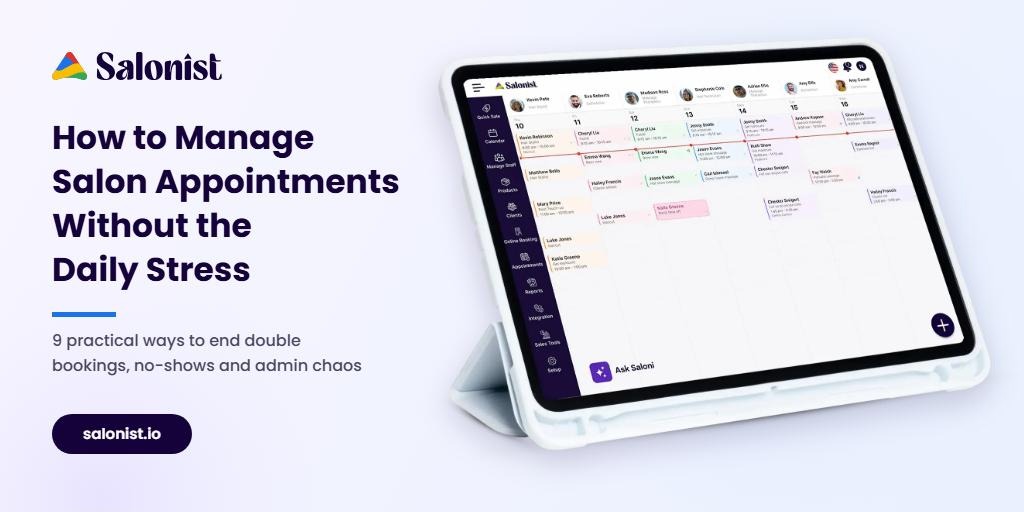
1. Double Bookings and a Chaotic Appointment Book
The problem: Phone calls, walk-ins, Instagram messages and WhatsApp requests all compete for the same calendar. When bookings are taken in several channels by several people, overlaps and mistakes are almost guaranteed.
How to solve it:
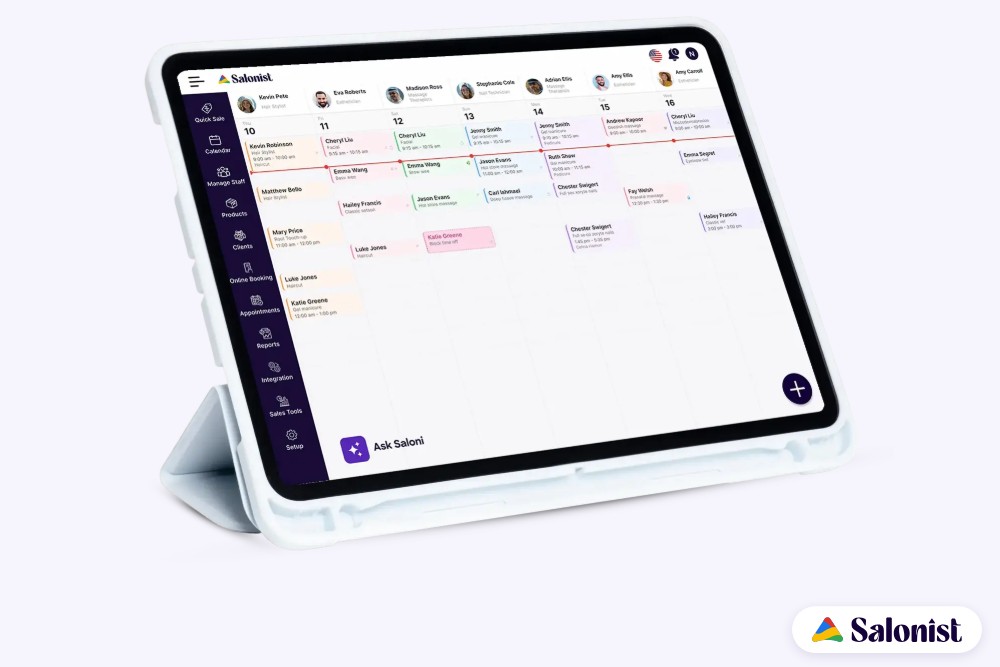
- Use a single shared calendar that every team member and every booking channel updates in real time.
- Set clear service durations, including processing and clean-up time, so slots are never squeezed.
- Let clients book themselves online 24/7 so fewer requests depend on someone answering the phone.
2. Appointment No-Shows and Late Cancellations
The problem: A client who does not turn up leaves a paid team member with nothing to do and a slot that could have gone to someone else. Repeated no-shows quietly drain revenue every week.
How to solve it:
- Send automated appointment reminders so clients have a timely prompt before their visit.
- Write a simple, visible cancellation policy and share it at the point of booking.
- Keep a short list of clients who are happy to take last-minute openings.
- Track which clients miss appointments most often so you can follow up personally.
3. Staff Scheduling and Shift Confusion
The problem: Rotas that change weekly, holiday requests sent by text and last-minute swaps make it hard for anyone to know who is working when. The result is either an understaffed Saturday or too many people on a quiet Tuesday.
How to solve it:
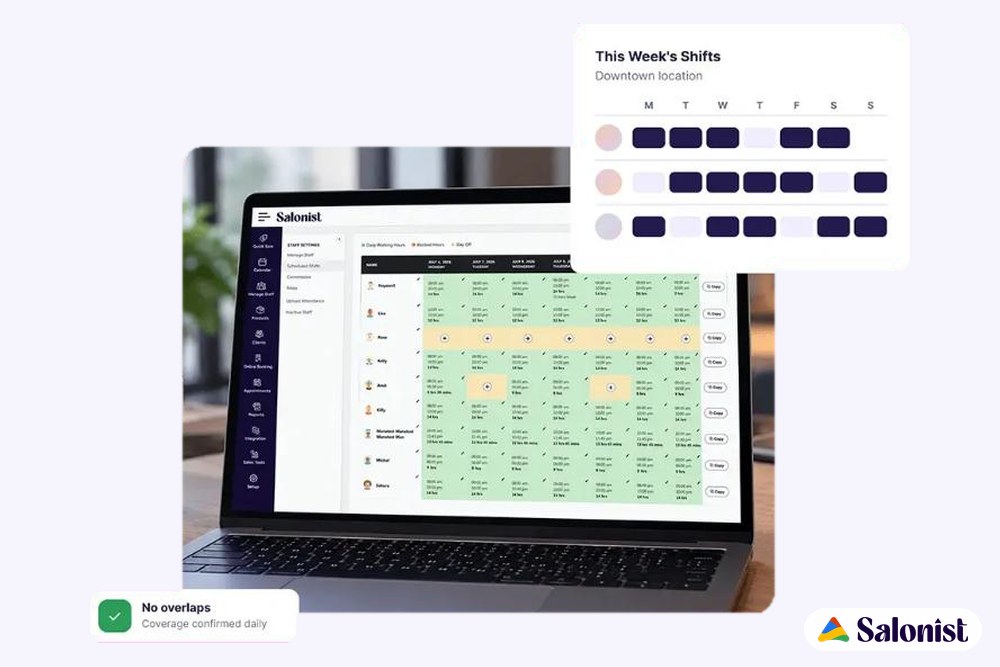
- Publish schedules in one place that every staff member can check from their own login.
- Match shifts to your busiest booking periods rather than habit.
- Agree on a single process for time-off requests and shift swaps.
Dedicated staff scheduling and commission tools make this much easier, because the rota and the appointment book are linked: you can only book a stylist when they are actually on shift.
4. Tracking Commissions and Payroll Fairly
The problem: Commission structures in salons can be complex, with different rates for services, retail and rebookings. Calculating them by hand at the end of the month takes time and invites disputes.
How to solve it:
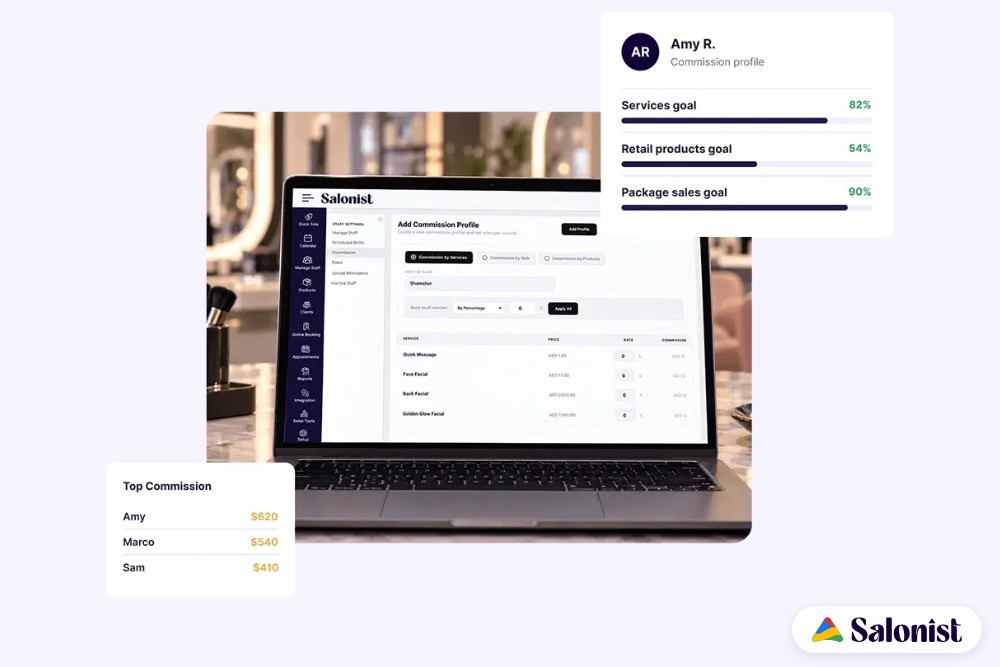
- Write down your commission rules clearly and share them with the team.
- Record every sale against the staff member who made it, at the moment it happens.
- Use reports that calculate commission automatically from recorded sales, so everyone sees the same numbers.
5. Running Out of Stock (or Overstocking)
The problem: Few things are more frustrating than starting a colour service and finding the shade you need is gone. On the other side, money tied up in slow-moving retail products sits on the shelf doing nothing.
How to solve it:
- Track both professional (back-bar) stock and retail stock, not just one of them.
- Set low-quantity alerts for products you use every day.
- Review what sells and what does not each month before you reorder.
- Use purchase orders so you have a record of what was ordered, from whom and when.
Good salon inventory tracking turns stock control from a weekly guessing game into a quick check of a dashboard.
6. Remembering Client Preferences and History
The problem: Clients expect you to remember their colour formula, the last treatment they had and that they prefer a quieter appointment. When that information lives only in one stylist's head, it disappears the moment that stylist is off or leaves.
How to solve it:
- Keep digital client profiles with service history and notes that the whole team can access.
- Add notes after every visit: formulas used, products bought, preferences mentioned.
- Check the profile before the client arrives so the conversation starts on the right foot.
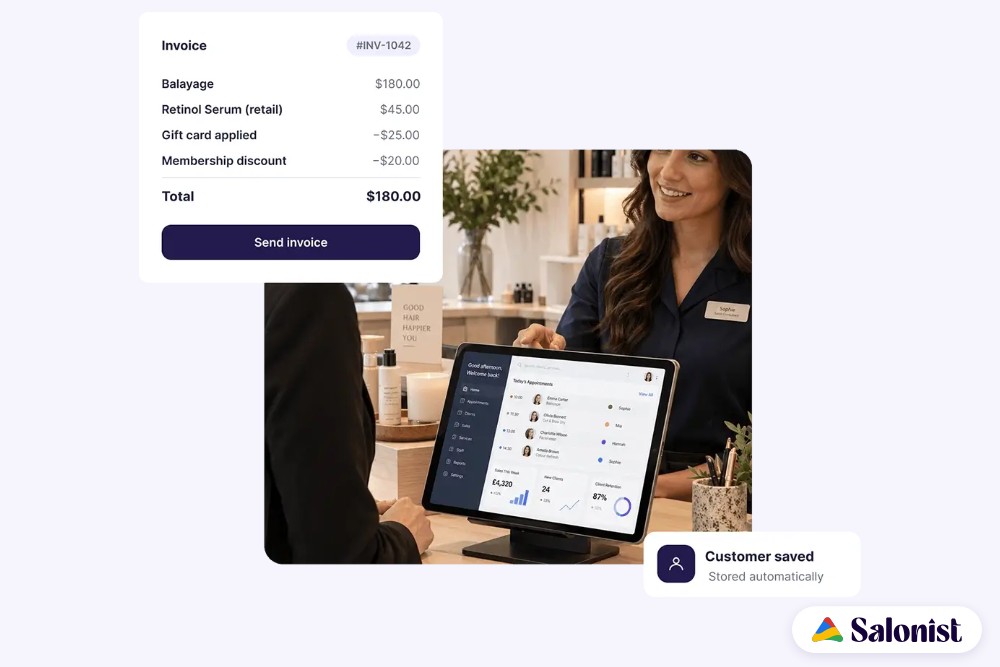
7. Slow Checkout and Messy Billing
The problem: A queue at the front desk at the end of a great service spoils the experience. Manual bills, split payments, gift cards and retail add-ons slow things down and make end-of-day reconciliation painful.
How to solve it:
- Use a point of sale that pulls the services straight from the appointment so nothing has to be re-entered.
- Accept the payment methods your clients actually use, including card and contactless.
- Add retail products, packages and gift cards to the same bill instead of handling them separately.
8. Keeping Clients Coming Back
The problem: Winning a new client takes effort and often money. If they visit once and never return, that effort is lost. Many salons focus heavily on attracting new clients and too little on bringing existing ones back.
How to solve it:
- Encourage rebooking before the client leaves the salon.
- Send friendly follow-up messages by email or SMS when a client is due for their next visit.
- Reward regular clients through loyalty points, memberships or special offers.
- Ask for reviews after visits so happy clients help you attract more people like them.
9. Making Decisions Without Clear Data
The problem: Many owners know their salon is busy but cannot say which services are most profitable, which staff members rebook the most clients, or which days are consistently quiet. Without that, decisions are based on gut feeling.
How to solve it:
- Review a short set of reports every week: revenue, bookings, staff performance and client retention.
- Compare this month with the same month last year rather than only with last week.
- Use what you learn to adjust pricing, promotions and staffing.
10. Owner Burnout and Too Much Admin
The problem: Many salon owners are also senior stylists. When evenings are spent on spreadsheets, rotas and reminder calls, there is little energy left for clients, the team or growing the business.
How to solve it:
- List every repetitive admin task you do each week and ask which ones could be automated.
- Delegate clearly, using role-based access so team members can handle tasks without seeing everything.
- Protect a fixed block of time each week for planning rather than firefighting.
Quick Comparison: Manual Fixes vs Using Salon Software
| Challenge | Manual approach | With salon software |
|---|---|---|
| Double bookings | One paper diary, one person in charge | Shared live calendar plus online booking |
| No-shows | Reminder phone calls the day before | Automated reminders |
| Staff rotas | Printed rota on the wall | Schedules linked to the appointment book |
| Commissions | Spreadsheet at month end | Calculated from recorded sales |
| Stock | Shelf counts and memory | Stock tracking with low-quantity alerts |
| Client history | Record cards or stylist memory | Shared client profiles with notes |
| Checkout | Separate till and manual bills | POS connected to appointments |
| Retention | Ad hoc messages | Email/SMS campaigns, loyalty and memberships |
| Reporting | Rough estimates | Revenue, staff and retention reports |
How to Start Fixing Your Salon Management Challenges This Month
You do not need to solve all ten problems at once. A simple plan works better:
- Pick your top two pain points. Ask your team where time is lost every day. The answers are usually obvious.
- Fix the foundation first. For most salons, that is the appointment book. Once bookings are reliable, staffing, checkout and reporting become easier.
- Move information into one system. Bookings, clients, staff, stock and sales work best when they are connected.
- Train the team and set clear habits. Tools only help if everyone uses them the same way.
- Review after 30 days. Check whether fewer slots were lost, checkout was faster and admin time dropped, then tackle the next challenge.
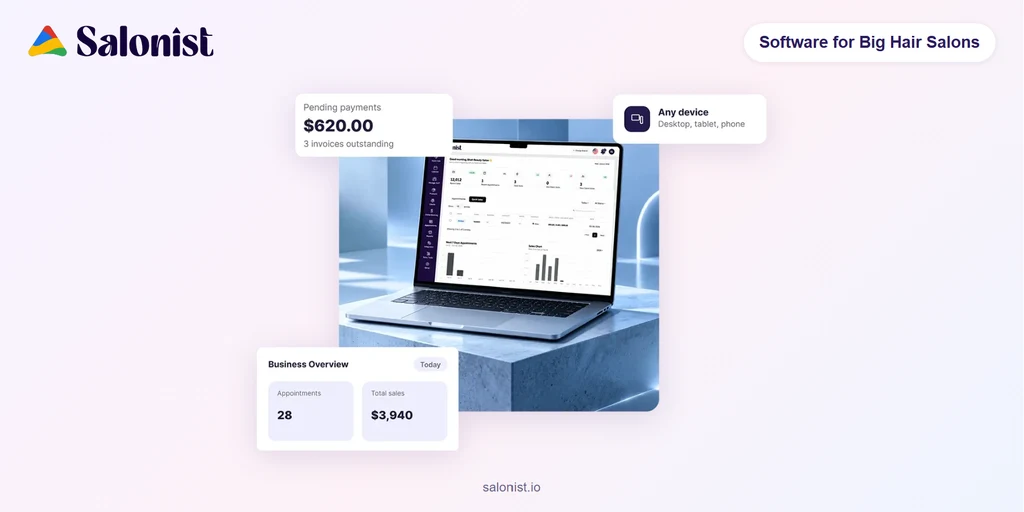
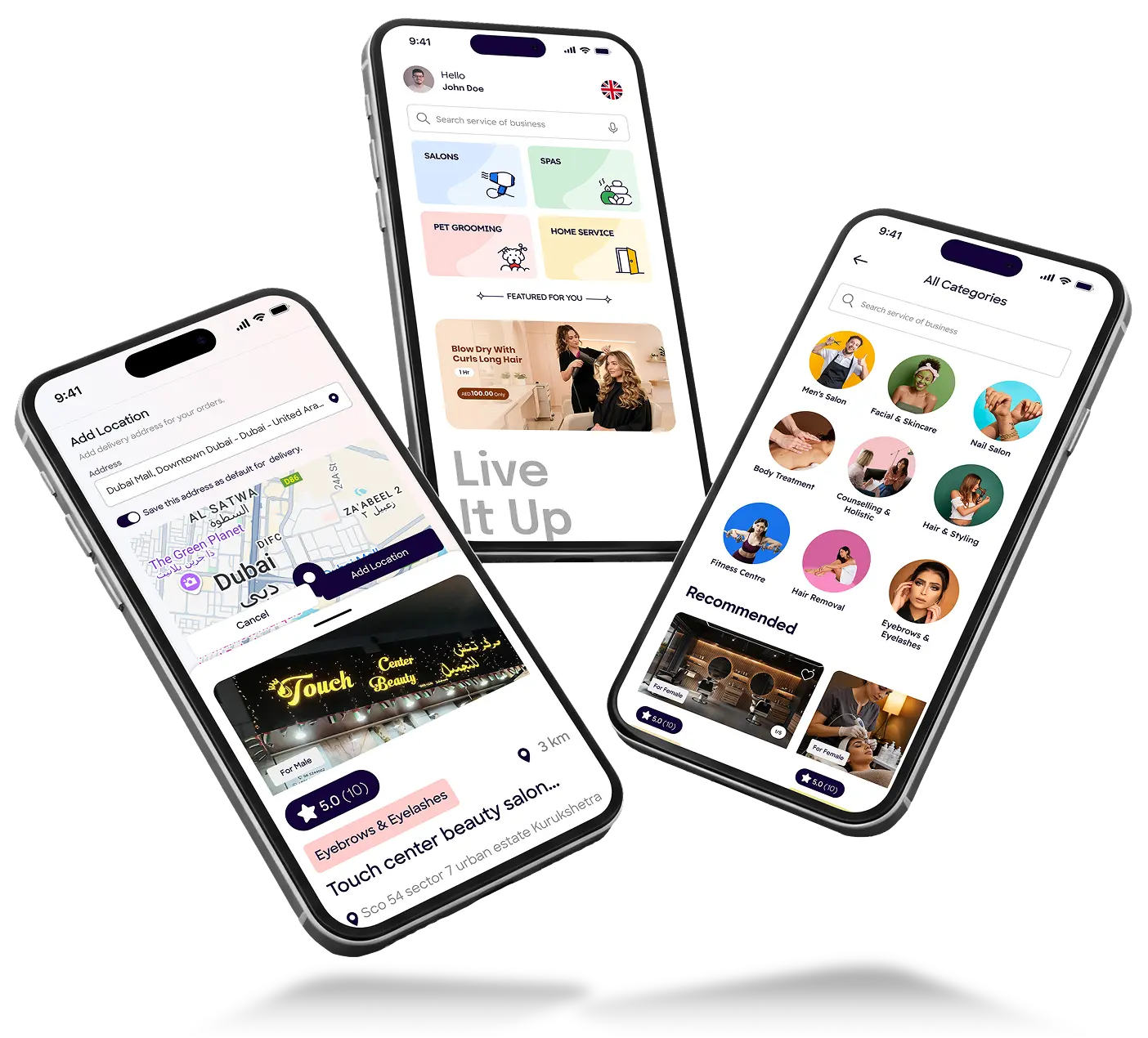
This is where all-in-one salon management software such as Salonist helps. It brings appointment management, online booking with automated reminders, staff scheduling and commissions, client profiles, inventory, point of sale, marketing and analytics into one dashboard, on web and mobile, so you are not stitching together separate tools.
Frequently Asked Questions
What is the biggest challenge in salon management?
It varies by salon, but appointment management is usually the foundation. Double bookings, no-shows and empty slots affect revenue, staff workload and the client experience all at once, so fixing the booking process tends to make other problems easier to solve.
How can a small salon manage operations without extra staff?
Focus on automating repetitive tasks such as appointment reminders, online booking and commission calculations. Keeping bookings, client records and sales in one system also cuts the time spent searching for information or re-entering it.
Is salon management software worth it for a single-location salon?
For many single-location salons, yes. The benefits of a shared calendar, client history, stock alerts and simpler checkout apply regardless of size. Try a free trial first and check that the tool fits the way your team works before committing.
How do I get my team to adopt new salon processes?
Involve them early by asking which daily tasks frustrate them most, explain how the change makes their day easier, and give everyone hands-on training. Starting with one process, such as online booking, and building from there keeps change manageable.
Turn Daily Challenges into a Smoother Salon
Every salon faces these challenges at some point. The difference between a stressful salon and a smooth one is rarely talent; it is usually systems. By tackling problems one at a time and bringing your bookings, team, clients and stock into one place, you free up time for what matters most: great service and a business that keeps growing.
Ready to simplify how you run your salon? Explore Salonist and start a free trial to see how it can help you solve your biggest salon management challenges.