Ask a groomer how long a goldendoodle takes, and you’ll get three answers: an hour, two hours, depends on the coat. All three can be true. That’s the trouble.
Groomers who run consistently profitable days have one thing in common: they track actual time. It sounds like a small habit, yet everything else depends on it, from pricing to scheduling to client management. Time sets the price. The calendar protects that time. Records tell you what it was at the last visit. Let those three work separately and the day leaks. Connect them, and a dog grooming business gets calmer and earns more. This guide goes through each, then retention, mistakes and growth.
How to Start and Manage a Dog Grooming Business
Before you worry about price lists, get the shape of the business right. Three decisions matter most.
Choose Your Dog Grooming Business Model
Working from home is the cheapest way in. No commercial rent, no lease. But you’ve got one table, one pair of hands, and whatever your local zoning allows, so check the rules before you buy a single clipper.
A mobile van changes the math. Fuel, vehicle upkeep and travel time all come out of your day, so you’ll see fewer dogs. What you get back is convenience that owners will pay extra for, and a quieter setting for dogs who hate busy shops.
A commercial salon gives you room to grow. It also gives you rent that arrives on schedule even when February is slow. If you go this route, our guide on how to choose a salon location covers footfall, rent and parking.
Identify Your Target Customers and Services
Walk your area first. Streets full of poodle crosses want scissor work and long appointments. A neighbourhood of labs and beagles mostly wants a bath, a good blow-out and nails, fast.
Baths and brushing are your quick entry point. Haircuts and breed-specific styling take longer and pay more. Nail trims, ear cleaning and specialty treatments can ride along as add-ons or sell as short visits on their own. A small menu you do well beats a long one you rush.
Set Up Your Business Operations
The gear is the easy bit: table, dryers, clippers, blades, tubs, cleaning supplies. The harder part is deciding who does what. A bather, a groomer and a front-desk person each work at their own pace, so loading all three jobs onto one person slows everything down.
Licensing, insurance and safety rules vary from place to place, so check what applies in your area before you start. When you speak to insurers, ask exactly what’s covered while an animal is in your care.
How to Set Profitable Dog Grooming Prices
Prices should start from your own numbers, not a competitor’s board down the road.
Calculate Your Operating Costs
Write down what it costs just to unlock the door. Rent, utilities, shampoo and supplies. Wages. Blade sharpening and the dryer that will eventually die. Marketing, insurance and software.
Now divide that by billable hours, not hours worked. Cleaning, paperwork and gaps between dogs don’t bring in a cent. Just as an illustration, $4,000 a month over 100 billable hours means every hour has to earn $40 before you’ve paid yourself.
Create a Dog Grooming Price List
Start with size. Weight bands are easier to explain on the phone or at the desk than a list of breeds, and you can lift the tricky breeds into a band of their own.
Then coat condition. A matted coat takes longer and is harder on the dog, so plenty of groomers add a matting fee. Say so when booking, not at pickup. Nobody enjoys a surprise at the till.
Finally, add-ons and bundles. Teeth brushing, a de-shedding treatment, bath plus nails. They raise the ticket without needing another appointment.
Set Cancellation, Deposit, and No-Show Policies
A no-show hurts a groomer more than most businesses, because each slot is built around one dog. Put your cancellation policy in writing and give clients a clear notice period.
Deposits suit long grooms and first-time clients. And a reminder the day before catches the honest forgetters, which is most of them. Our guide to the challenges faced by salon owners covers more fixes for no-shows.
How to Schedule Dog Grooming Appointments Efficiently
A calendar built on real durations keeps dogs calmer and owners on time.
Choose the Right Appointment Duration
Don’t guess. For a few weeks, note when each dog goes on the table and when it comes off. Then set slot lengths by size, breed and coat.
Leave a few minutes at the end of each slot to wipe down and reset your tools. And think twice before stacking big, thick-coated dogs back to back on one groomer. It’s how you end the day tired and behind.
Reduce Waiting Times and Scheduling Conflicts
Double bookings mostly come from paper notes and memory. One shared calendar fixes the bulk of it. Confirm when you take the booking, then remind close to the day.
When someone has to cancel, a short list of owners who’d take a gap at short notice saves the hour.
Manage Walk-In Customers Alongside Booked Appointments
In grooming, walk-ins usually become drop-offs, so the dog stays with you for a while. Set a daily limit on walk-ins so no booked dog gets pushed back. Decide by service: a nail trim fits a small gap; a full groom doesn’t.
Quote a pickup time you can beat. Our guide to handling walk-ins without disrupting appointments covers the front-desk side in more depth.
How to Maintain Accurate Dog Grooming Client Records
If prices are the money side, records are the memory. Without them, you’re relearning every dog each visit.
What Information Should a Dog Groomer Record?
Begin with pet name, breed, age and size, plus the owner’s contact details and how they like to be reached. Then write down what protects you and the dog:
- Grooming history and service preferences
- Allergies, skin sensitivities and handling notes, like “hates the dryer near the face”
- Vaccination details and an emergency contact, where your policy or local rules ask for them
Why Grooming History Matters
History keeps results consistent. If you used a number 7 blade last time and the owner loved it, the next groomer shouldn’t have to guess. It also shows how a coat changes over the months, and it’s where special requests and feedback belong.
Put the time notes from the scheduling section here too. After a year, they’ll show you which dogs you’ve been underpricing.
Digital Records vs. Paper-Based Client Files
Paper is cheap. It’s also slow to search, easy to lose and awkward to share. Digital files turn up in seconds, and you stop retyping the same details every visit.
Either way, you’re holding people’s contact details. Limit who can access them and keep backups.
How to Improve Customer Retention for Your Dog Grooming Business
Coats grow and shed on a predictable cycle, which gives you a ready-made reason for the next visit.
Book Repeat Visits Around Regular Grooming Intervals
Recommend an interval based on each dog’s coat type and length rather than one rule for everyone. Ask owners to book the next session at pickup, while they’re admiring how good their dog looks. Consistency does the rest. For more ideas, read our guide on how to improve your rebooking rate.
Use Automated Reminders and Follow-Ups
Send SMS and email reminders before each appointment. A quick message after the groom asking how the dog settled in goes a long way. Then a nudge when the next session is due, so owners don’t have to remember.
Collect Reviews and Build Customer Trust
Ask for feedback soon after pickup, while the owner is still pleased. Answer concerns politely and fix what you can. Reviews carry extra weight in this trade, since people are handing over an animal they love.
How Salonist Helps Manage Your Dog Grooming Business
Salonist is salon management software with dedicated pet grooming software. Here’s where its tools meet the jobs above.
Simplify Dog Grooming Appointment Scheduling
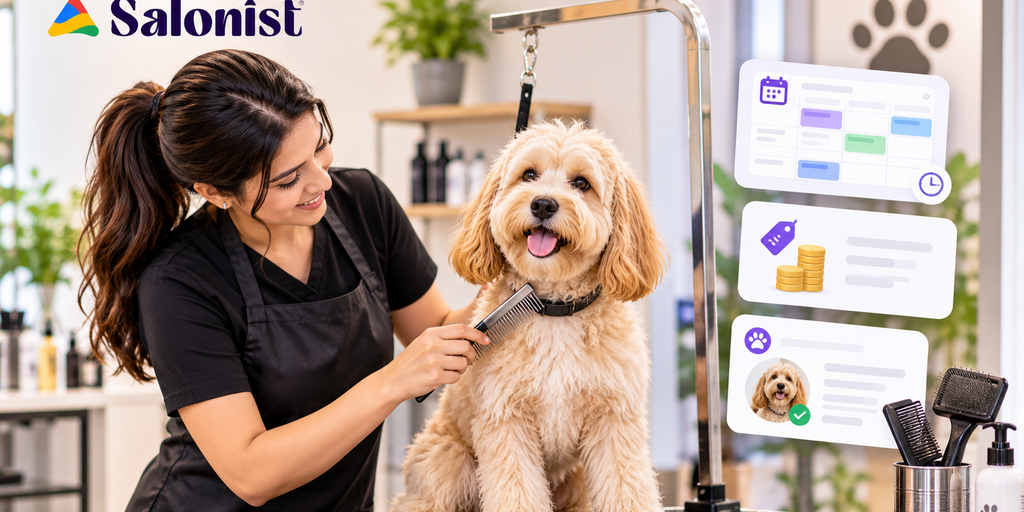
Bookings live in one calendar, so you can see every groomer’s day at a glance. Slot blockers protect breaks, and clients can book online at any hour. Fewer phone calls, fewer double bookings.
Organize Client Records and Grooming History
Salonist’s client profiles hold visit history, spend, preferences and notes. For a groomer, that’s where blade choices, handling tips and the pet’s details can live, so anyone on the team can read them before the dog arrives.
Manage Pricing, Payments and Daily Operations
Build your service menu around the size and coat tiers from the pricing section. Take payments at the point of sale and use your payment reports to see which services earn the most per hour.
Streamline Your Grooming Process
Booking, records and payments connect, so you stop retyping. Reminders can go out automatically, including through WhatsApp tools like Interakt and Wati. Less admin, more time with the dogs.
Common Dog Grooming Business Mistakes to Avoid
Nearly all of these come from skipping the time question.
Underpricing Services and Ignoring Operating Costs
Matching a rival’s price tells you nothing about your margin. Work out your hourly cost twice a year, and again if rent or supplies jump.
Overbooking Appointments and Rushing Grooming Sessions
A packed diary looks great until one dog needs extra patience. Rushed work means nicks, unhappy owners and lost regulars.
Losing Client Information or Failing to Update Records
An old phone number or a forgotten allergy is more than a nuisance. Update the file at each visit, while the details are still fresh.
Relying Only on Manual Schedules and Reminders
A notebook works when you see five dogs a day. Not twenty.
Practical Steps to Grow Your Dog Grooming Business
Once your pricing, scheduling and record-keeping are in place, here’s what to do next.
Create Grooming Packages and Loyalty Programs
Offer package deals, such as a groom every six weeks at a small discount. Start with your most popular services so you don’t lose money while you test. Prepaid credit is another option; see how prepaid wallets improve cash flow.
Build Your Presence Online and Locally
Make sure your business listings are complete. Add clear before-and-after photos, with the owner’s permission. Make booking possible from every page.
Track Revenue, Repeat Bookings, and Customer Retention
Check monthly: income per groomer hour, how many clients rebooked, who’s gone quiet. Those numbers tell you more than total sales. Our list of KPIs to track every week includes formulas and targets.
Expand Services Based on Customer Demand
Watch what owners ask for. If three clients a week want a de-shedding treatment, that’s your next menu item.
Frequently Asked Questions
How do I start a dog grooming business?
Start by choosing a business model (home-based, mobile van or commercial salon), studying the breeds and services your area needs, and checking local licensing, insurance and safety rules. Then set prices from your own costs and build a schedule based on real grooming times.
How should I price dog grooming services?
Work out your monthly operating costs and divide them by billable hours to find what each hour must earn. Then price by size or weight band, add a fee for matted coats, and offer add-ons and bundles such as nails, teeth brushing or de-shedding.
How long should a dog grooming appointment be?
It depends on size, breed and coat condition. Track when each dog goes on and comes off the table for a few weeks, then set slot lengths from that data and leave a few minutes between dogs to clean and reset your tools.
Should dog groomers charge a deposit?
Deposits work well for long grooms and first-time clients, because a no-show leaves a slot built around one dog empty. Combine a written cancellation policy with a reminder the day before to catch most missed appointments.
What client records should a dog groomer keep?
Record the pet’s name, breed, age and size, the owner’s contact details and preferred channel, grooming history, service preferences, allergies, skin sensitivities and handling notes, plus vaccination details and an emergency contact where required.
How can dog groomers handle walk-ins without disrupting bookings?
Treat walk-ins as drop-offs, set a daily limit so booked dogs aren’t pushed back, and only accept services that fit the gaps, such as nail trims. Quote a pickup time you know you can beat.
How do I get more repeat clients for my grooming business?
Recommend a grooming interval based on each dog’s coat, ask owners to book the next visit at pickup, send automated reminders and follow-ups, and collect reviews soon after each groom.
Can Salonist be used for a dog grooming business?
Yes. Salonist offers pet grooming software with one booking calendar, online booking, slot blockers, client profiles for grooming history and handling notes, point-of-sale payments, reports and automated reminders, including WhatsApp through tools like Interakt and Wati.
Conclusion: Build a More Profitable and Organized Dog Grooming Business
Pricing, scheduling and records are really one system. Records show how long dogs take. That time sets your prices and shapes a calendar that doesn’t run late. Owners notice: consistent grooming, appointments that start on time, and a groomer who remembers their dog.
If you’re ready to move on from notebooks, explore Salonist’s pet grooming software or start a free trial and test it on a real week of bookings. For more guides, browse the pet grooming section of the Salonist blog.